





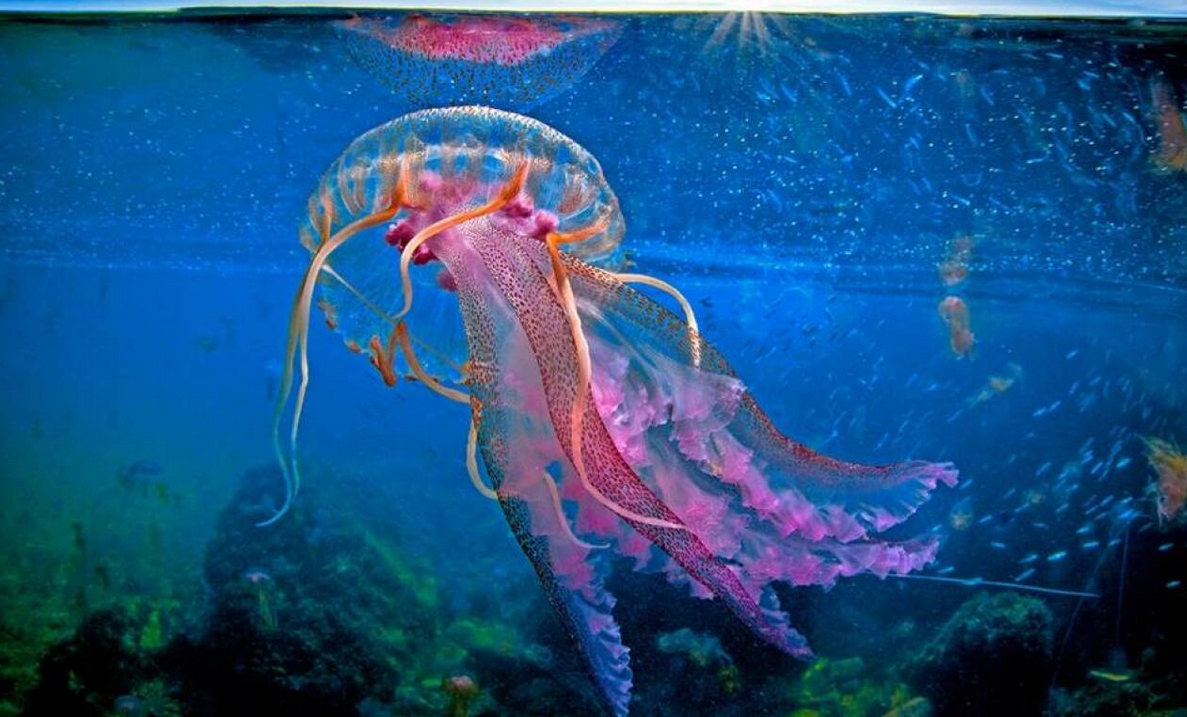
Summer has arrived, and purple jellyfish have already made their appearance in Greek waters, signaling yet another summer of their continued presence in the region.
According to the Hellenic Biodiversity Observatory, there is currently a spike in purple jellyfish sightings, with reliable reports from Chalkida and the northern Evian Gulf.
Specifically, “Northern Evia is already facing a serious problem, as it acts as an outlet from the Pagasetic Gulf to the open sea. The Pagasetic Gulf itself continues to host jellyfish, particularly along its eastern coasts. The outbreak has reached as far as the Northern Sporades, with confirmed sightings in Skiathos and Skopelos.”
The Observatory urges swimmers in these areas to “be especially cautious.”
“Pelagia noctiluca is a spectacular but dangerous species due to its intense sting,” the Observatory notes, adding: “The same signs observed during the major Mediterranean outbreak between 2020 and 2023 are now reappearing. Currently, Gibraltar is facing the most serious situation, while outbreaks have also been reported in Spain, France, Italy, and the Adriatic.”
Full Announcement:
Unfortunately, our initial assessments of the extent of the purple jellyfish outbreak in the Pagasetic Gulf and surrounding areas were underestimated. This was due to low public participation in reporting sightings, which distorted the picture of the real situation.
At present, the outbreak is spreading much faster than expected. There are now reliable reports from:
Chalkida and the Northern Evian Gulf, where the problem appears more severe the further north one goes Northern Evia, already facing serious issues as it serves as the outlet of the Pagasetic Gulf The Pagasetic Gulf itself, where jellyfish remain mainly on the eastern shores The Northern Sporades, with confirmed sightings in Skiathos and Skopelos
If you swim or visit beaches in these areas, be particularly careful.
Pelagia noctiluca is an impressive but dangerous species due to the intensity of its sting.
Reports should ideally be uploaded to iNaturalist, so that the species can be confirmed by experts and made publicly available to the scientific community and general public.
In parallel, the same signs from the major purple jellyfish outbreak in the Mediterranean from 2020 to 2023 are being observed again. Currently, Gibraltar is facing the most severe conditions, and outbreaks have also been reported in Spain, France, Italy, and the Adriatic Sea.
What is the Purple Jellyfish?
The purple jellyfish or stinger (scientific name: Pelagia noctiluca) belongs to the Pelagiidae family and is currently the only recognized species in its genus. The scientific name derives from Greek and Latin: pelagia means “of the sea” (from pelagos), and noctiluca combines Latin nox (night) and lux (light), describing a marine organism capable of glowing in the dark (bioluminescence). It is found globally in tropical and warm temperate seas, though records from the North Atlantic (including the Mediterranean and Gulf of Mexico) may represent closely related but as yet unrecognized species.
This is a relatively small and multicolored jellyfish; both its tentacles and its bell (unusually for jellyfish) are covered with stinging cells. Stings are common and painful, with symptoms that may persist for an extended period, though they are generally not dangerous. However, swarms of Pelagia noctiluca have been known to devastate entire fish farms. As a result, it has become one of the most extensively studied jellyfish species.
Symptoms of a Purple Jellyfish Sting
The stinging cells (nematocysts) cause redness, swelling, and burning sensations on human skin. In some cases, they can lead to severe dermonecrotic, cardiac, or neurotoxic reactions, especially in sensitive individuals.
Common symptoms after contact include:
A burning pain Intense redness of the skin Occasionally, a visible jellyfish imprint on the skin Nausea Drop in blood pressure Tachycardia Headache Vomiting Diarrhea Bronchial spasms Shortness of breath
In rare cases, systemic symptoms may occur, such as:
Hypotension (low blood pressure) Hoarseness Wheezing during inhalation Generalized swelling and rash Altered consciousness or communication Vomiting
If these systemic symptoms appear, immediate hospital transfer is necessary.
What to Do If You’re Stung by a Purple Jellyfish
Remove any tentacles stuck to the skin – Do not use bare hands, as this may cause stings on the hands and spread the irritation. Rinse the area thoroughly with seawater – If unavailable, scoop sand into your palm and rub the area to remove tentacle fragments. Do not use fresh water, as it may activate remaining stinging cells. Apply ice or cold compresses – This helps reduce local skin reactions. Apply a corticosteroid cream – This limits the inflammatory response and relieves pain and itching. Take an antihistamine pill – These help with systemic allergic symptoms such as itching, especially in cases involving large skin areas. Seek medical help if symptoms are severe or persist – In such cases, a corticosteroid injection may be needed. Visit a hospital or health center promptly.
Ask me anything
Explore related questions