





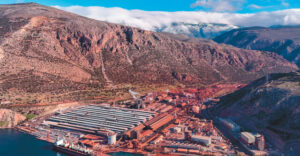
“If the Middle East has oil, China has rare earth elements” said Deng Xiaoping, the architect of modern China’s economy, back in 1987. In the rapidly shifting world of 2025, where the battle for high technology is intensifying, Greece is taking the pole position in Europe for the production of critical minerals for Aerospace, Artificial Intelligence, computing, industry, and beyond. Through a mining boom, the country has hit the gas with the goal of becoming a leading force in the extraction of critical raw materials and rare earths.
As demand for minerals used in the development of Artificial Intelligence and other crucial technologies, such as microchip production, surges—and as China tightens its grip by restricting exports (as the world’s largest producer of rare earths)—investments planned in Greece have the potential to change history.

Perhaps the most striking example is gallium, an extremely rare mineral, which, along with germanium, is among the most critical materials for semiconductor production. With a new investment in bauxite mining, from which gallium is derived, Greece is now ready to start gallium production and could meet nearly the entire demand of the Old Continent, producing 50 of the 65 tons the EU requires annually (based on 2024 demand).
Critical Figures
This flurry of activity, investment, and planning in the country’s mining sector is no coincidence. Greece has entered the EU’s radar along with a handful of other European regions, such as Greenland, Sweden, Finland, and Norway, due to strong indications of the presence of rare earths and other critical minerals that have become the focal point for high-tech development, industrial sectors, and the energy transition. What are these minerals, and why is their extraction so crucial?
Take, for example, permanent magnets. For their production—which are used in electric motors, cables, sensors, disc drives, speakers, microphones, medical fields like MRI scanners, and more—Europe needs magnesium, which it imports 97% from China, and rare earths, which are 100% processed in that distant country. Or consider microchips and photovoltaic panel cells, which require gallium.
Batteries are produced using lithium, nickel, and cobalt, which is extracted from the Congo, while wind turbines need boron, which the EU imports 98% from Turkey. Similar dependencies exist for other materials, such as titanium and tungsten, which are widely used in aerospace and defense applications, along with many other minerals.
Among the critical raw materials being extracted are magnesium, niobium, beryllium, lithium, antimony, phosphorus, gallium, platinum, scandium, silicon, bismuth, cobalt, fluorite, hafnium, barite, and both light and heavy rare earths. How can Europe participate in technological evolution or even manufacture everything from smartphones and tablets to cars, aircraft, solar panels, fiber optics, power cables, and more when it depends on third parties for the import of these minerals?

Since last year, the EU has focused on establishing a framework to ensure a secure and sustainable supply of critical raw materials, accelerating production by simplifying licensing procedures for strategically significant mining projects and encouraging investment.
In Greece, where geological surveys and traces found in areas already being mined for other minerals have long indicated the presence of deposits that could serve as strategic “superweapons,” words have quickly turned into action. With 30 out of the 34 critical raw materials from the EU list already identified, drilling has begun in earnest.
The Mining Operations
In public mining areas—lands owned by the Greek state—critical mineral raw materials such as bauxite, phosphate, barite, antimony, cobalt, magnesium, silicon, tungsten, graphite, platinum group metals, and rare earths have already been identified and are being extracted. This, combined with ongoing investments and the planning of dozens more, puts Greece in the spotlight. But does the country truly hold the pole position, or are these just hopeful projections about a potential future in the spotlight?
According to the Ministry of Energy’s report on Mining, Quarrying Activity, and Geothermal Energy in Greece for 2023, released a few days ago, Greece accounts for 85% of Europe’s total bauxite production and ranks 13th worldwide. Additionally, it can now produce gallium. It is the top European and second-largest global producer of perlite, while also ranking first in Europe and sixth worldwide in bentonite production.
Greece holds a significant position in other minerals as well. It is the second-largest nickel producer in Europe and 23rd in the world, the fourth-largest magnesium producer in the EU and ninth globally, and ranks sixth in Europe and 13th globally for lignite production.
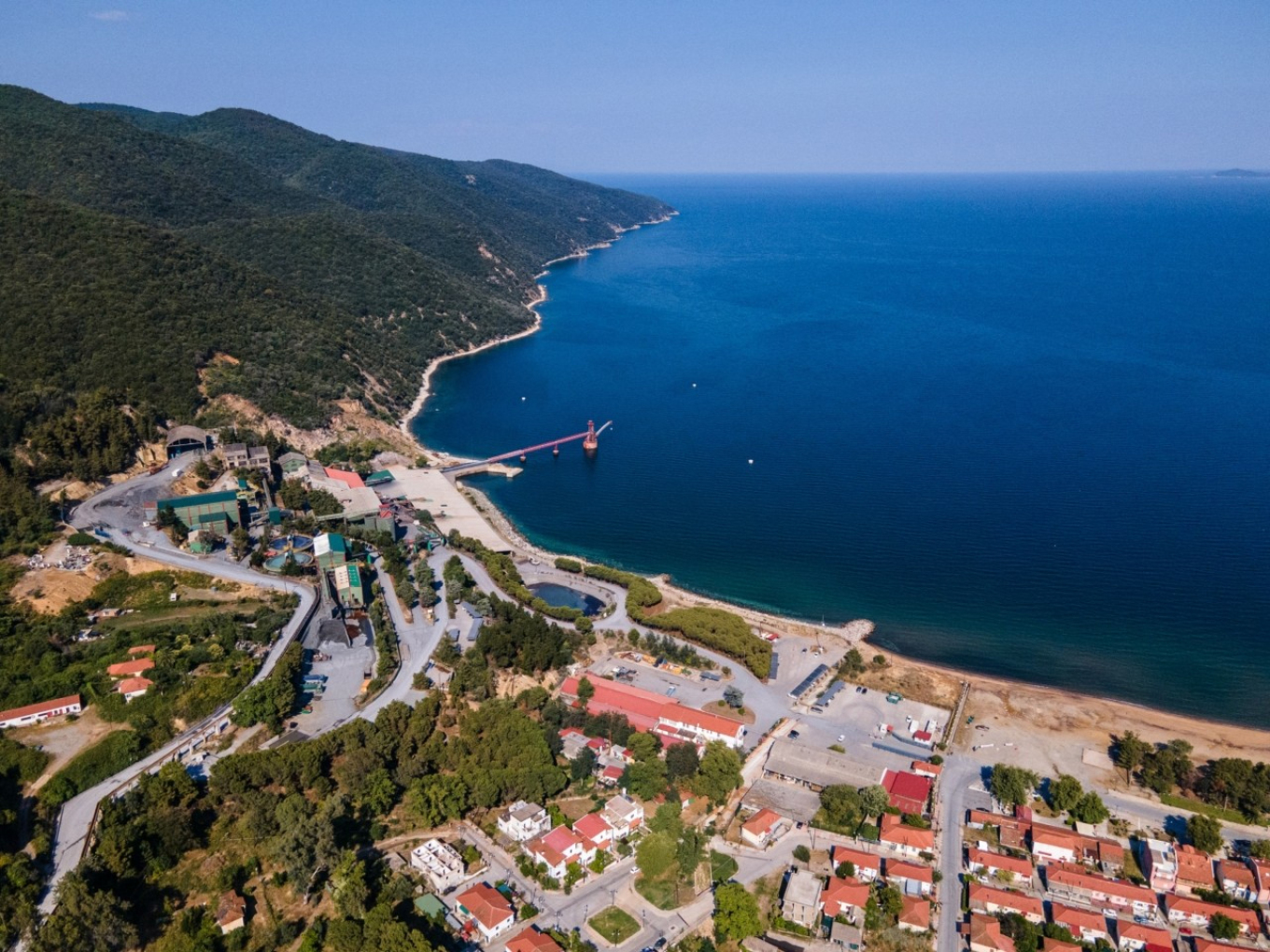
Greece also holds top rankings, from fourth to seventh place in Europe, for the extraction of lead, aluminum, zinc, gold, and more. The country has also maintained its standing in the global rankings and the flow of other minerals, such as laterite, galena, arsenopyrite, and sphalerite, with the latest report showing production increases ranging from 18% to 29%.
For context—considering that the rare earths and critical minerals market currently does not exceed €9 billion but is expected to see explosive profit growth due to surging demand from technological development—the Ministry of Energy’s report states that the annual turnover of the “Mining and Quarrying” sector reached €1,073,298 in 2023, marking a 6.6% increase from the previous year. In terms of overall business turnover in the Greek economy, this means the sector’s contribution reached 0.2%, with mineral exports amounting to €681 million.
Germanium and Gallium
Northern Greece, particularly the regions of Eastern Macedonia-Thrace and Central Greece, has the highest concentration of mining and mineral processing activity, hosting the majority of mining and quarrying operations.
In Central Macedonia (which, along with Western and Central Greece, holds 90% of energy mineral mines), 50% of non-energy mineral extraction takes place, while the South Aegean region hosts 22% of industrial mineral quarries.
Some areas are of particular interest to investors. For example, Metlen’s €300 million investment positions Greece as a key gallium producer, while the Molaoi Project by Australia’s Rockfire holds one of the world’s 20 largest undeveloped zinc deposits, with confirmed copper and germanium reserves. Germanium, along with gallium, is essential for microchip production and is also widely used in aerospace, defense, energy, and other high-tech applications.
Studies by Greece’s Geological and Mineral Research Institute (EAGME) have confirmed truly rare mineral and rare earth deposits across various parts of the country. Antimony deposits have been identified in Chios (Keramos region) and Kilkis, while tungsten and zinc have been located in the Kimmeria region of Xanthi.
The Global Race
How critical are these minerals, and how useful are these rare earths (which consist of 17 chemically similar metals, including the 15 lanthanides of the periodic table, yttrium, and scandium)? So crucial that without them, not only would the race for AI and Robotics stall, but even the production of essential modern technologies—such as mobile phone microchips, batteries, and computer screens—would be impossible.
With demand soaring, China restricting supply, and Europe aiming for technological independence, analysts predict that this market will skyrocket to at least €400 billion by 2030. Greece has the opportunity to become a “superweapon” in this global race that is already underway and set to intensify worldwide.
Ask me anything
Explore related questions


