
×
GreekEnglish

×
  • Politics
  • Diaspora
  • World
  • Lifestyle
  • Travel
  • Culture
  • Sports
  • Cooking
Wednesday
14
Jan 2026
weather symbol
Athens 15°C
  • Home
  • Politics
  • Economy
  • World
  • Diaspora
  • Lifestyle
  • Travel
  • Culture
  • Sports
  • Mediterranean Cooking
  • Weather
Contact follow Protothema:
Powered by Cloudevo
> Culture

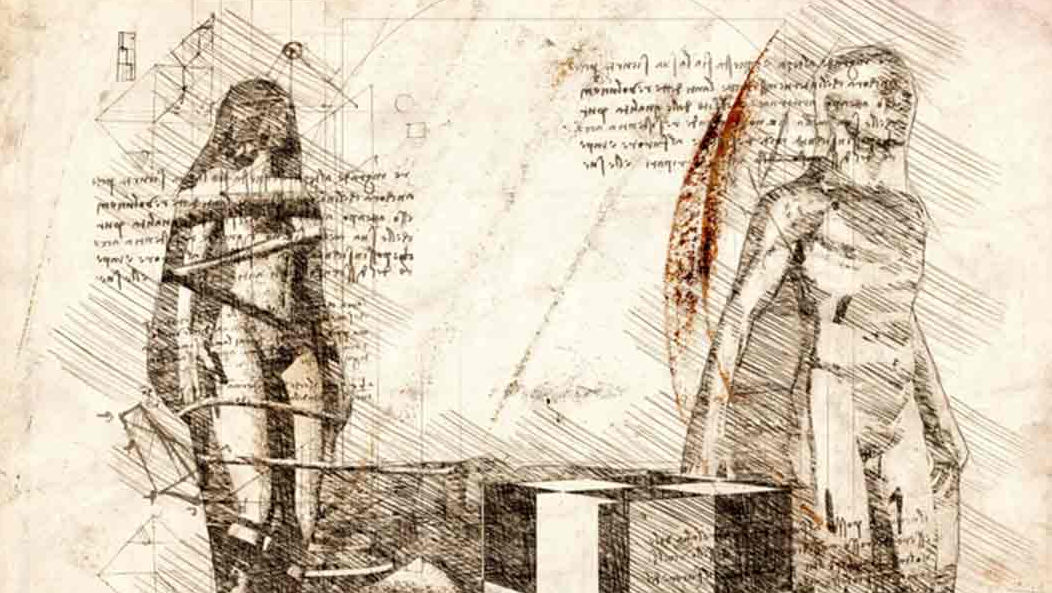
What makes us human? How ancient thinkers saw the human-animal divide

Who or what is man?

Newsroom March 26 09:18

What makes us human? What (if anything) sets us apart from all other creatures? Ever since Charles Darwin’s theory of evolution, the answer to these questions has pointed us back to our own animal nature.

Yet the idea that, in one way or another, our humanity is entangled with the non-human has a much longer and more venerable history. In the West, it goes all the way back to Classical antiquity – to Greek and Roman views about humans and animals.

The Greek philosopher Aristotle (384-322) first argued the human stands out from all other animals through the presence of  logos (“speech” but also “reason”). Numerous Greek and Roman thinkers engaged in similar attempts to name what, exactly, sets humans apart.

Who or what is man? The arguments these philosophers came up with verged from the obscure to the outright bizarre: The human alone has the capacity to have sex at all seasons and well into old age; the human alone can sit comfortably on his hip bones; the human alone has hands that can build altars to the gods and craft divine statues. No observation seemed too far-fetched or outlandish.

See Also:

US Federal Judge: Illegal immigrants can carry guns

>Related articles

Tuesday the 13th: Why everyone thinks it’s bad luck

South Korea prosecutors seek death penalty for former President Yoon Suk Yeol

Parliamentary elections set for April 12 in Hungary as Orbán appears weakened in polls

And yet, above all, the argument that animals lack logos continued to resonate. In classical antiquity it became powerful enough to coin the very word for animals in ancient Greek:  ta aloga – “those without logos”.

This position was taken up by the philosophical school of the Stoics and from there came to influence Christianity, with its view of manmade in the image of God.

Continue here: Ancient Origins

Ask me anything

Explore related questions

#Ancient Greeks#ancient thinkers#animals#history#humans#philosophy#science#world
> More Culture

Follow en.protothema.gr on Google News and be the first to know all the news

See all the latest News from Greece and the World, the moment they happen, at en.protothema.gr

> Latest Stories

Sounion: A place of reconnection with the Ancient Greeks, the significance of the Temple of Poseidon

January 14, 2026

Meteo: Forecasts point to a warm February in Greece, with temperatures up to +1.2°C above average

January 14, 2026

Greece participates for the first time in the OECD TALIS International Survey

January 14, 2026

The head of the Hellenic Civil Aviation Authority resigned over the blackout in the Athens FIR

January 14, 2026

UBS: Greek banks in the spotlight – Piraeus Bank portfolio top pick

January 14, 2026

Demas asks for the resignation of the CAA commander within the day for the FIR blackout

January 14, 2026

Tasoulas on the loss of Vassiliou: A leader with vision and a European orientation

January 14, 2026

K.M. with his endless patience, the shock report and responsibilities, the pollsters and President Maria, Jim Allen in Athens, the saga of “Egnatia Insurance”

January 14, 2026
All News

> Lifestyle

Next-level skylines: The towers transforming cities in 2026

From living and working spaces, to places of culture and tourism, these skyscrapers showcase contemporary architecture

January 13, 2026

Stefanos Kasselakis: The family “jewel” in Ekali is up for rent at €20,000 per month

January 10, 2026

Emily Ratajkowski in Athens with Romain Gavras

January 2, 2026

Sakkari on the marriage proposal from Konstantinos Mitsotakis: “I am a very lucky girl”

January 2, 2026

Konstantinos Mitsotakis proposed to Maria Sakkari

January 1, 2026
Homepage
PERSONAL DATA PROTECTION POLICY COOKIES POLICY TERM OF USE
Powered by Cloudevo
Copyright © 2026 Πρώτο Θέμα