

×
GreekEnglish

×
  • Politics
  • Diaspora
  • World
  • Lifestyle
  • Travel
  • Culture
  • Sports
  • Cooking
Saturday
24
Jan 2026
weather symbol
Athens 14°C
  • Home
  • Politics
  • Economy
  • World
  • Diaspora
  • Lifestyle
  • Travel
  • Culture
  • Sports
  • Mediterranean Cooking
  • Weather
Contact follow Protothema:
Powered by Cloudevo
> Culture

This Roman weapon of mass destruction is 2000 years old (video)

These ancient projectiles, once considered iron arrowheads, proved to be far deadlier upon closer inspection

Newsroom November 9 12:14

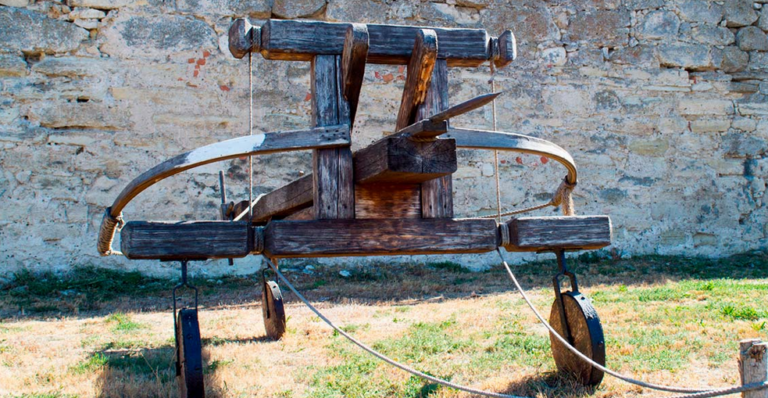
In the heart of northern Britain, a monumental structure once divided the land into two distinct territories. Emperor Hadrian commissioned its construction in 122 AD, and in just six years, Hadrian’s Wall, an imposing fortification, stretched from coast to coast. Eight thousand Roman soldiers stood guard, unwavering in their duty to protect the Empire’s northern frontier at any cost. Deep within the rugged terrain of southern Scotland, an archaeological discovery in 2015 unveiled a concealed battleground from two millennia ago. Iron Age Britons clashed with the formidable Roman Army, but it wasn’t swords and spears that defined their warfare. Buried beneath the earth lay a cache of ballistic weaponry, forgotten by history.

These artifacts showcased a different facet of Roman military might. These ancient projectiles, once considered iron arrowheads, proved to be far deadlier upon closer inspection. X-ray scans revealed their true nature – precision bolts designed to pierce through armor. These bolts, an ancient counterpart to modern assault rifles, were fired from a remarkable piece of tactical artillery, suspected to be the manuballista. The presence of these lethal bolt tips suggests that the manuballista played a pivotal role in the assault on Burnswark. Historians believe that such weaponry left little chance for the local Britons in the face of the Roman war machine.

See Also:

>Related articles

The Shackled Men of Phaleron: This is what the space that will host the major archaeological find will look like – Photos

The dirty side of Pompeii: baths filled with sweat and urine, according to a new study

Rains and snow fill Lake Yliki with water (video)

Turkish parliament dumps Coke, Nestle from menus over alleged Israel support

Source: Ancient Origins

Ask me anything

Explore related questions

#culture#history#military#Roman Empire#video#weapon
> More Culture

Follow en.protothema.gr on Google News and be the first to know all the news

See all the latest News from Greece and the World, the moment they happen, at en.protothema.gr

> Latest Stories

“The Discombobulator”: Trump’s revelation about the secret weapon the U.S. used during the capture of Maduro in Venezuela

January 24, 2026

New videos show the moment a female employee was struck outside the Vrilissia Hellenic Post (ELTA) office after a dispute over a parcel

January 24, 2026

“Blackout” in the Athens FIR: What really happened on January 4

January 24, 2026

Minimum wage for 2026 enters consultation, target set at €950 by 2027

January 24, 2026

War in Ukraine: Diplomacy in Abu Dhabi, Bombardments in Kyiv and Kharkiv

January 24, 2026

Sydney McLaughlin, world’s best athlete, announces pregnancy: “I created a human with the love of my life”

January 24, 2026

The Shackled Men of Phaleron: This is what the space that will host the major archaeological find will look like – Photos

January 24, 2026

Weather: Storms and muddy rain arriving from Sunday – when Attica will be affected

January 24, 2026
All News

> Lifestyle

Stefi: ‘The song I sent to Eurovision is about the unity of people across Europe

The singer will present her song in the first semi-final of Sing for Greece 2026 on February 11

January 24, 2026

A final farewell to fashion icon Valentino with white roses: Wintour, Versace, and Hathaway say goodbye

January 23, 2026

How old are your lungs? The simple at-home test that gives the answer

January 22, 2026

Farah Diba Pahlavi, the story of Iran’s first and last “empress”

January 22, 2026

Fotini Pelouso: Her roots in Thebes, the hardest Greek word, and her favorite scene in ‘The Great Chimera’

January 22, 2026
Homepage
PERSONAL DATA PROTECTION POLICY COOKIES POLICY TERM OF USE
Powered by Cloudevo
Copyright © 2026 Πρώτο Θέμα