
×
GreekEnglish

×
  • Politics
  • Diaspora
  • World
  • Lifestyle
  • Travel
  • Culture
  • Sports
  • Cooking
Thursday
22
Jan 2026
weather symbol
Athens 9°C
  • Home
  • Politics
  • Economy
  • World
  • Diaspora
  • Lifestyle
  • Travel
  • Culture
  • Sports
  • Mediterranean Cooking
  • Weather
Contact follow Protothema:
Powered by Cloudevo
> World

Hungary: Russia to build two new reactors at nuclear plant outside Budapest

The plans for the two new reactors serve Hungary's strategic interests, Foreign Minister Péter Szijjártó said

Newsroom August 26 01:05

Hungary’s nuclear regulator has granted a license to develop two new reactors at the Paks nuclear power plant, to be built by Russia’s Rosatom, under an agreement signed in 2014 between Budapest and Moscow.

Despite serious delays, the project, which was awarded without a tender to Rosatom, has often been cited as “proof of the close ties” between Hungarian Prime Minister Viktor Orbán and Russian President Vladimir Putin.

In a decision published on its website late on Thursday, Hungary’s Nuclear Energy Authority said the existing Russian-built 2 gigawatt plant in Paks can be expanded with two new reactors, pending further permits.

>Related articles

Ukraine: 60% of Kyiv without electricity after Russian strikes on energy facilities

Japan reopens the world’s largest nuclear power plant

Putin – Witkoff meeting on Thursday

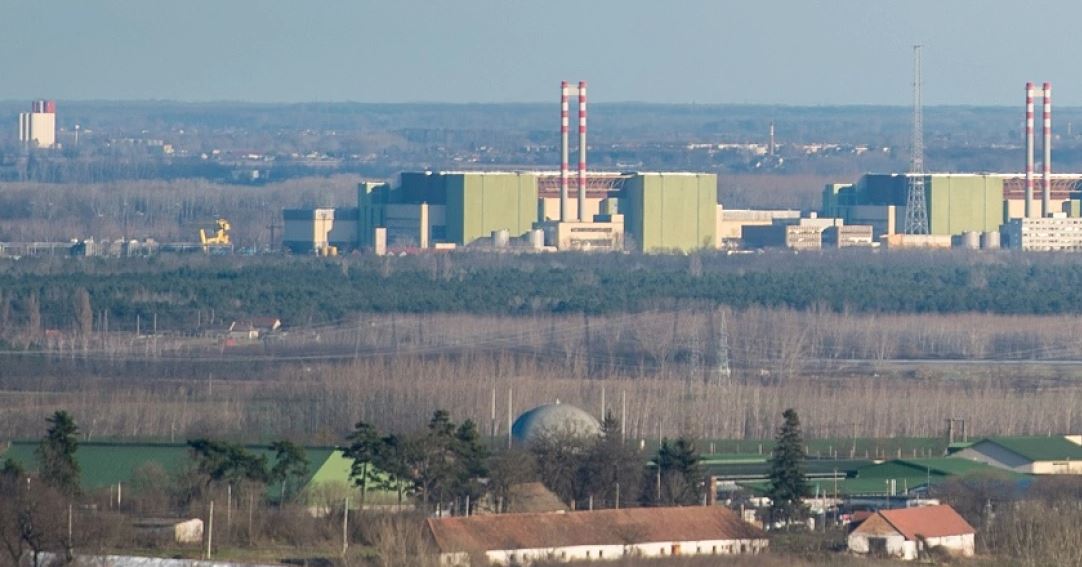
Hungary plans to expand the Paks plant (100 kilometers outside Budapest ) with two Russian-made reactors, each with a capacity of 1.2 gigawatts. Nuclear power is not subject to sanctions by the European Union.

The plans for the two new reactors serve Hungary’s strategic interests, Foreign Minister Péter Szijártó said after a meeting in May with Rosatom’s chief executive. According to what has been reported, Russia will give Hungary a state loan of up to 10 billion euros for the new project, while the total cost of works at the plant will amount to 12.5 billion euros.

The Paks plant currently has four small Russian-made reactors with a combined capacity of about 2,000 megawatts, which began operating between 1982 and 1987. The plant now produces almost half of all electricity in Hungary.

Ask me anything

Explore related questions

#construction#Hungary#nuclear power plant#russia
> More World

Follow en.protothema.gr on Google News and be the first to know all the news

See all the latest News from Greece and the World, the moment they happen, at en.protothema.gr

> Latest Stories

Rhodes: The Ministry of Culture is implementing enhancement works at the archaeological site of “Pervola”

January 22, 2026

Mytilineos-Tsakos ‘ big deal in storage projects in Central Greece

January 22, 2026

Fotini Pelouso: Her roots in Thebes, the hardest Greek word, and her favorite scene in ‘The Great Chimera’

January 22, 2026

Pulse poll: ND leads by 16.5 points, the 2nd largest margin since 2016, with left and center-left losing ground — Karystianou, Tsipras

January 21, 2026

Karditsa: Snow and severe weather – More than a meter in the mountainous areas, snow chains mandatory

January 21, 2026

Vasilis Markou: Strategy and outreach for Attica Vineyard

January 21, 2026

Tsiaras: Bipartisan dialogue necessary for the development of a national agricultural strategy

January 21, 2026

Turkish authorities raid Temu’s offices in Turkey

January 21, 2026
All News

> World

Turkish authorities raid Temu’s offices in Turkey

According to a company spokesperson, during the operation the competent authorities seized laptops and other electronic devices from the company’s offices

January 21, 2026

Ukraine: 60% of Kyiv without electricity after Russian strikes on energy facilities

January 21, 2026

Trump from Davos: I want Greenland as a base for the Golden Dome; I will not use force, but if you say “no,” we will remember it — watch live

January 21, 2026

Japan reopens the world’s largest nuclear power plant

January 21, 2026

Putin – Witkoff meeting on Thursday

January 21, 2026
Homepage
PERSONAL DATA PROTECTION POLICY COOKIES POLICY TERM OF USE
Powered by Cloudevo
Copyright © 2026 Πρώτο Θέμα