
×
GreekEnglish

×
  • Politics
  • Diaspora
  • World
  • Lifestyle
  • Travel
  • Culture
  • Sports
  • Cooking
Saturday
17
Jan 2026
weather symbol
Athens 8°C
  • Home
  • Politics
  • Economy
  • World
  • Diaspora
  • Lifestyle
  • Travel
  • Culture
  • Sports
  • Mediterranean Cooking
  • Weather
Contact follow Protothema:
Powered by Cloudevo
> technology

Galaxy Hunters: The search for Cosmic Dawn (long read)

Information, facts & more about cosmology

Newsroom May 20 10:06

Imagine a universe with no stars, no galaxies, and no light: just a black brew of primordial gases immersed in a sea of invisible matter. Beginning a few hundred thousand years after the blinding flash of the big bang, the universe plunged into a darkness that lasted almost a half billion years. Then something happened that changed it all, something that led to the creation not just of stars and galaxies, but also of planets, people, begonias, and lizards. What could that something have been?

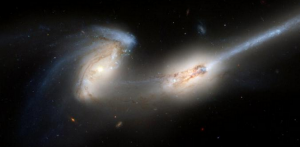
New clues to this puzzle—one of the most fundamental in cosmology—are pouring in from many directions. Theorists using supercomputer simulations have retraced the steps that produced the first stars and galaxies. Astronomers peering through giant new telescopes have journeyed back in time in search of the first galaxies. Researchers studying images from the Hubble Space Telescope have discovered the breathtaking diversity of the galaxies that surround us today—from giant pinwheels blazing with the blue light of newborn stars, to misshapen footballs glowing with the ruddy hue of stars born billions of years ago, to tattered galaxies trailing long streamers of stars torn out by collisions with intruder galaxies.

>Related articles

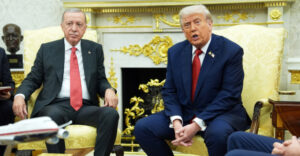
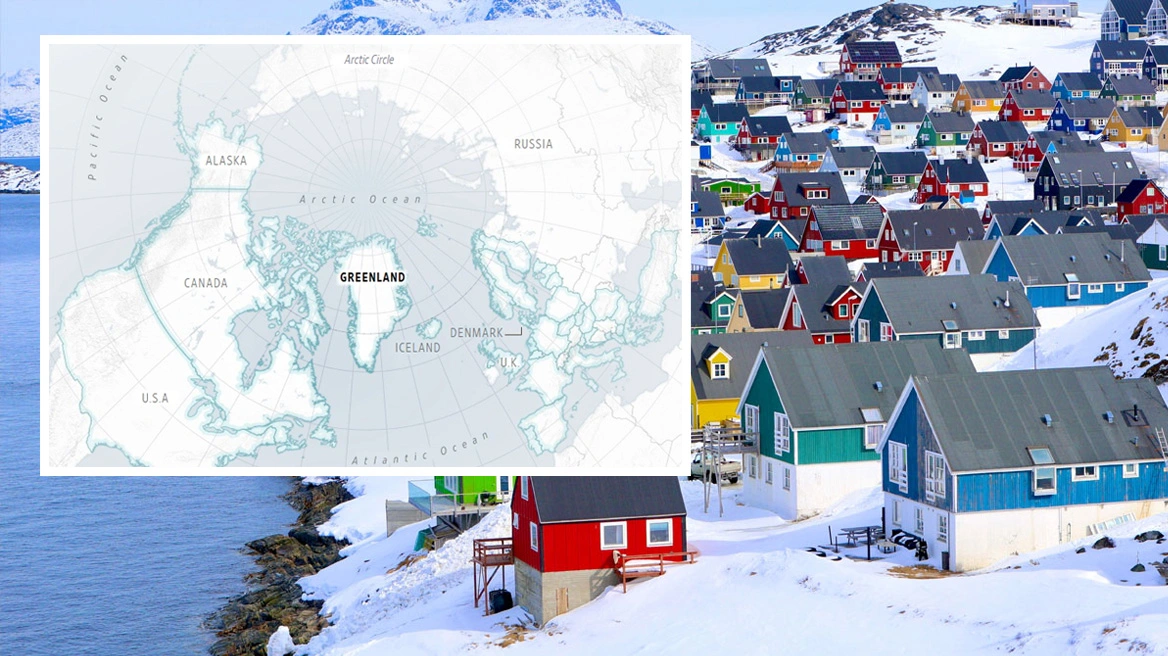
Trump threatens tariffs against those who oppose U.S. plans for Greenland

CIA chief in Venezuela meets with Rodriguez

Ballistic missile strike hits pier in Ukraine

Less than a century ago astronomers knew only about our own galaxy, the Milky Way, which they believed held about 100 million stars. Then observers discovered that some of the fuzzy blobs in the sky weren’t in our own galaxy, but were galaxies in their own right—collections of stars, gas, and dust bound together by gravity. Today we know that the Milky Way contains more than 100 billion stars and that there are some 100 billion galaxies in the universe, each harboring an enormous number of stars.

Our view of the universe is changing completely, says cosmologist Carlos Freak of the University of Durham in England, and it’s largely because of our new understanding of galaxy formation: “It’s no exaggeration to say that we’re going through a period of change analogous to the Copernican revolution.”

Read more HERE

Ask me anything

Explore related questions

#astronomy#astrophysics#black matter#cosmology#cosmos#facts#information#physics#science#space#technology#universe#world
> More technology

Follow en.protothema.gr on Google News and be the first to know all the news

See all the latest News from Greece and the World, the moment they happen, at en.protothema.gr

> Latest Stories

War, diplomacy, or insurrection: What’s next in Iran

January 17, 2026

New tensions in the Middle East as Trump invites regional leaders to the Gaza Peace Council

January 17, 2026

Weather: A return to winter in the coming days – Cold and strong northerly winds – Kolydas’ post

January 17, 2026

A view of Nikolaos Stasinopoulos of Viohalco – The “enduring imprint” of Greece’s greatest industrialist

January 17, 2026

The horror of the “Tariff of the Dead”: how the Iranian regime prices the bodies of protesters

January 17, 2026

Mitsotakis on the Karystianou party: “There is a long distance between being the parent of a tragedy victim and being the leader of a political party”

January 17, 2026

Patras in carnival mode – This evening, the city’s official opening ceremony

January 17, 2026

Greenland as the first line ofdefense for the U.S. and NATO:

January 17, 2026
All News

> World

War, diplomacy, or insurrection: What’s next in Iran

The Iranian regime faces the most serious threat to its survival, despite the repression of protests - The possibility of a US strike remains on the table - The landscape for the next day is blurred

January 17, 2026

New tensions in the Middle East as Trump invites regional leaders to the Gaza Peace Council

January 17, 2026

The horror of the “Tariff of the Dead”: how the Iranian regime prices the bodies of protesters

January 17, 2026

Greenland as the first line ofdefense for the U.S. and NATO:

January 17, 2026

Changes at top universities: Oxford abolishes the term ‘doctores’ for inclusion reasons

January 17, 2026
Homepage
PERSONAL DATA PROTECTION POLICY COOKIES POLICY TERM OF USE
Powered by Cloudevo
Copyright © 2026 Πρώτο Θέμα