
×
GreekEnglish

×
  • Politics
  • Diaspora
  • World
  • Lifestyle
  • Travel
  • Culture
  • Sports
  • Cooking
Sunday
25
Jan 2026
weather symbol
Athens 15°C
  • Home
  • Politics
  • Economy
  • World
  • Diaspora
  • Lifestyle
  • Travel
  • Culture
  • Sports
  • Mediterranean Cooking
  • Weather
Contact follow Protothema:
Powered by Cloudevo
> Politics

Number of Students in Greek Schools to Drop 30% by 2035

The decrease in birthrate in Greece after the onset of the financial crisis amounts to almost 30 percent overall

Newsroom January 2 04:20

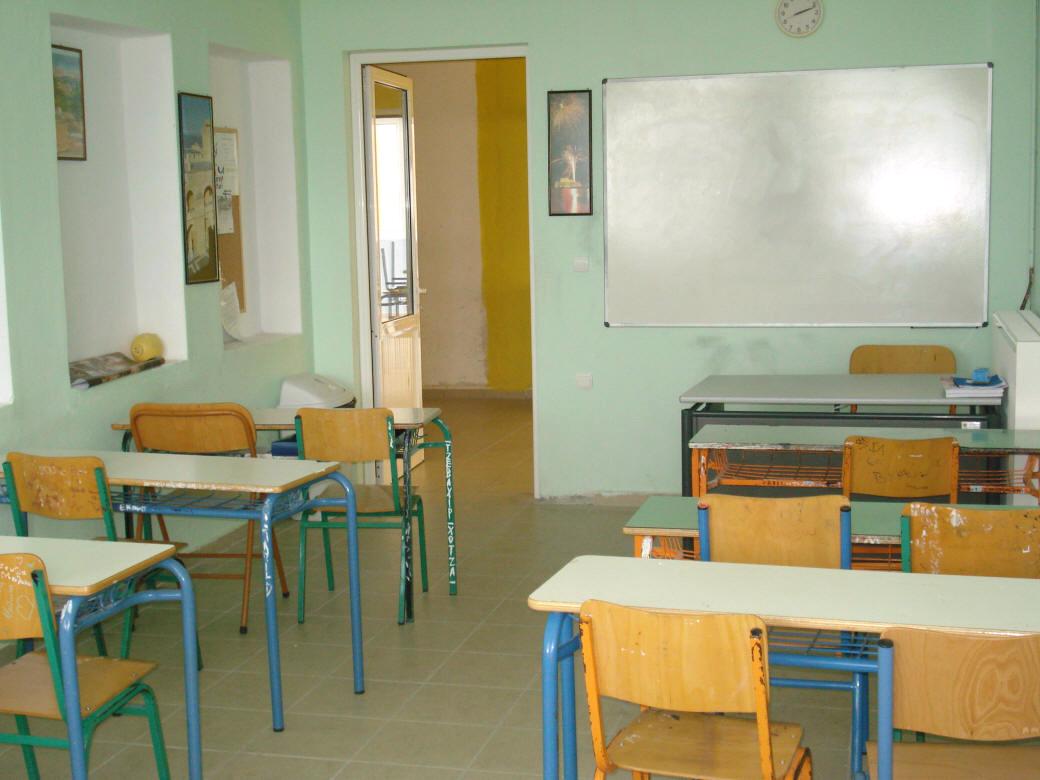
The number of students in Greek schools will decrease nearly 30 percent by 2035, with the largest drop in absolute figures being recorded in primary schools, according to a Foundation for Economic and Industrial Research (IOBE) study on Greek education.

It is estimated that while there were 1.48 million students in 2008, as a result of a reduction in the birth rate since the financial crisis, only 1.05 million children will be attending kindergarten, elementary school, junior high school and high school.

Indicative of the decline is the 6% drop recorded in the number of primary school children over the last five years. In absolute numbers, there were 108,500 pupils in Greek primary schools in 2013 and only 102,000 in 2017.

According to the IOBE report, the downward trend which was in effect from 2013-2018 was temporarily reversed in 2014, when children born in 2008 went to elementary school. The year that they were born is considered to be the last year of a “mini-boom” in births in Greece.

The steep decline is also reflected in secondary education. There were 71,800 high school graduates who claimed a spot at universities in 2008. By the year 2035 this number is predicted to drop by 24.5 percent to 54,200. The numbers of those admitted to tertiary education would drop by 23.8 percent, representing a total of 51,800 students.

However, the most significant impact of the economic crisis on education is reflected in the reduction of the total student population, which has occurred since the beginning of the crisis. From a total of 1.53 million students in 2000, the number of pupils dropped to 1.49 million in 2009, which represents a decrease of 3.1 percent.

There were a total of 1.44 million students in Greece in 2016, which represents a decrease of 5.9 percent since the year 2000.

This development is due to several factors. An “out-migration” of foreign families occurred after the crisis, when between 2011 and 2015 the number of repatriated and foreign students dropped 55.9 percent, from 159,500 to 70,300.

There was also a marked decrease in the Greek birth rate since 2010, which became even worse from the year 2012 onward, with the exception of 2016, when the rate increased compared to the previous year.

>Related articles

Greece–Italy 12–5: Historic bronze medal at the European Water Polo Championship

The path of the patricide—from prison for the murder of his mother to admission to Dromokaiteio and his discharge

“My child, I’m dying now, don’t hurt me anymore”: the last words of the 80-year-old before being killed by his son

The decrease in birthrate in Greece after the onset of the financial crisis amounts to almost 30 percent overall. There were 118,300 births in the nation in 2008 and only 88,500 in 2017.

These staggering numbers have already begun to be reflected in the number of children in kindergarten, who numbered 162,000 in 2014 but only 155,200 in 2015. Enrollment in the first grades of elementary school also mirrors the decline, from a level of 107,200 in 2016 down to just 101,900 in 2017.

Source: Philip Chrysopoulos/greekreporter

Ask me anything

Explore related questions

#birth rate#children#demographic problem#greece#greek#politics#population replacement#schools
> More Politics

Follow en.protothema.gr on Google News and be the first to know all the news

See all the latest News from Greece and the World, the moment they happen, at en.protothema.gr

> Latest Stories

Greece–Italy 12–5: Historic bronze medal at the European Water Polo Championship

January 25, 2026

The path of the patricide—from prison for the murder of his mother to admission to Dromokaiteio and his discharge

January 25, 2026

“We have appealed to the Council of State, to ministries, we asked for the intervention of the Transparency Authority—no one is doing anything,” says the mayor of Milos about the new environmental crime

January 25, 2026

“My child, I’m dying now, don’t hurt me anymore”: the last words of the 80-year-old before being killed by his son

January 25, 2026

Smiling climber Alex Honnold waves to onlookers watching him from inside the skyscraper in Taiwan – watch the video

January 25, 2026

New “ecological crime” with a five-star hotel in Mytakas, Milos, next to Sarakiniko – watch the video

January 25, 2026

Mitsotakis: Europe must remain united and maintain channels of cooperation with the US, even in times of tension – We seek an active role in Gaza

January 25, 2026

Week of pay rises for about 1 million private-sector employees due to changes in direct taxation – See examples

January 25, 2026
All News

> World

Smiling climber Alex Honnold waves to onlookers watching him from inside the skyscraper in Taiwan – watch the video

Using mainly his legs, Alex Honnold reached the top of the world’s 11th-tallest building – He described the fee he received as “awkwardly large” – The climb had originally been scheduled for Friday but was postponed due to weather conditions

January 25, 2026

A university in Texas banned a professor from teaching Plato

January 25, 2026

ICE agents shot and killed a protester in Minneapolis (videos)

January 24, 2026

“The Discombobulator”: Trump’s revelation about the secret weapon the U.S. used during the capture of Maduro in Venezuela

January 24, 2026

War in Ukraine: Diplomacy in Abu Dhabi, Bombardments in Kyiv and Kharkiv

January 24, 2026
Homepage
PERSONAL DATA PROTECTION POLICY COOKIES POLICY TERM OF USE
Powered by Cloudevo
Copyright © 2026 Πρώτο Θέμα