

×
GreekEnglish

×
  • Politics
  • Diaspora
  • World
  • Lifestyle
  • Travel
  • Culture
  • Sports
  • Cooking
Monday
02
Feb 2026
weather symbol
Athens 15°C
  • Home
  • Politics
  • Economy
  • World
  • Diaspora
  • Lifestyle
  • Travel
  • Culture
  • Sports
  • Mediterranean Cooking
  • Weather
Contact follow Protothema:
Powered by Cloudevo
> technology

Ancient mummy DNA reveals surprises about genetic origins of Egyptians

Interestingly, the study found no genetic trace of Alexander the Great's heritage but that's not all...

Newsroom April 27 02:12

For the first time, scientists have extracted full nuclear genome data from ancient Egyptian mummies. The results offer exciting insights into how different ancient civilizations intermingled and also establishes a breakthrough precedent in our ability to study ancient DNA.

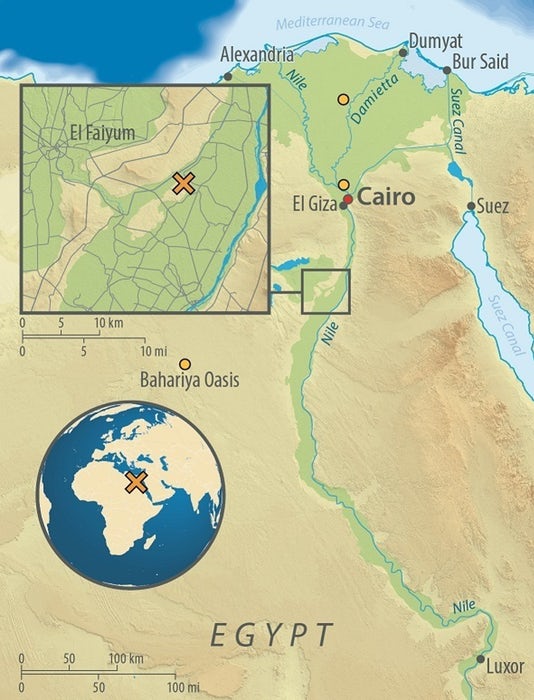
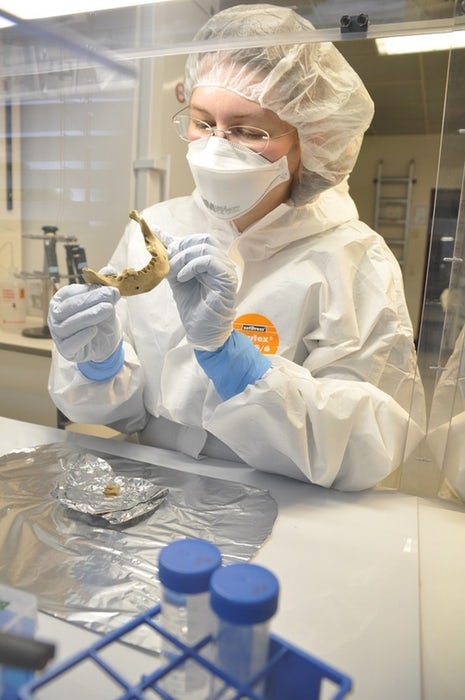
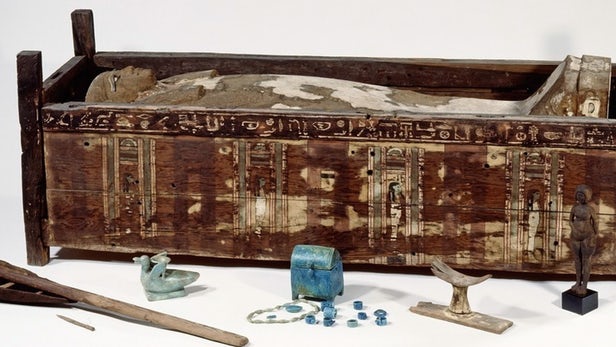
The international team of scientists, led by researchers from the University of Tuebingen and the Max Planck Institute for the Science of Human History in Jena, sampled 151 mummified remains from a site called Abusir el-Meleq in Middle Egypt along the Nile River. The samples dated from 1400 BCE to 400 CE and were subjected to a new high-throughput DNA sequencing technique that allowed the team to successfully recover full genome-wide datasets from three individuals and mitochondria genomes from 90 individuals.

“We wanted to test if the conquest of Alexander the Great and other foreign powers has left a genetic imprint on the ancient Egyptian population,” explains one of the lead authors of the study, Verena Schuenemann.
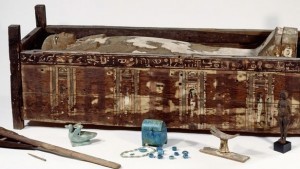
ancient-egyptian-mummy-dna-3

In 332 BCE, for example, Alexander the Great and his army tore through Egypt. Interestingly the team found no genetic trace of not only Alexander the Great’s heritage, but of any foreign power that came through Egypt in the 1,300-year timespan studied.

“The genetics of the Abusir el-Meleq community did not undergo any major shifts during the 1,300 year timespan we studied,” says Wolfgang Haak, group leader at the Max Planck Institute, “suggesting that the population remained genetically relatively unaffected by foreign conquest and rule.”

They found that ancient Egyptians were closely related to Anatolian and Neolithic European populations, as well showing strong genetic traces from the Levant areas in the near east (Turkey, Lebanon).
ancient-egyptian-mummy-dna-1

This genetic ancestry stands apart from more modern Egyptians who share around 8 percent of their DNA with Sub-Saharan African populations. The data offers a fascinating insight into a prolonged period where ancient Egyptian ancestry did not mix with its southern African counterparts. It also suggests that this gene flow into modern Egyptian populations occurred relatively recently, within the past 1,500 years.

The study points out that the Trans-Saharan slave trade, which moved an estimated 7 million sub-Saharan slaves up to Northern Africa, over a thousand years up to the nineteenth century, most likely was how this genetic line influenced modern Egyptians.
ancient-egyptian-mummy-dna-2

>Related articles

Budget, private universities, ministerial accountability, and judicial leadership: the four pillars of Greece’s constitutional revision

Bangladeshi man arrested for operating an illegal mosque in Athens to be deported – His residence permit also revoked

Music gala “Hope and Love” at the Athens Concert Hall

Now that a robust and reliable way has been developed to study the DNA of ancient remains the researchers hope to broaden their analysis across a wider geographical variety of mummies. This will not only help paint a clearer portrait of Egypt’s population history but give us a greater understanding of the genetic movements of ancient civilizations in the region.

The study was published in the journal Nature Communications.

Source: newatlas

Ask me anything

Explore related questions

#Alexander the Great#ancient egypt#dna#greece#mummy#sahara#slaves
> More technology

Follow en.protothema.gr on Google News and be the first to know all the news

See all the latest News from Greece and the World, the moment they happen, at en.protothema.gr

> Latest Stories

Musk also irritated with Nolan after reports that “Helen of Troy” will be black in “The Odyssey” – Online backlash over the director’s woke choice

February 2, 2026

Budget, private universities, ministerial accountability, and judicial leadership: the four pillars of Greece’s constitutional revision

February 2, 2026

Syrian Government forces enter Kurdish-controlled city of Hasakah

February 2, 2026

Bangladeshi man arrested for operating an illegal mosque in Athens to be deported – His residence permit also revoked

February 2, 2026

Music gala “Hope and Love” at the Athens Concert Hall

February 2, 2026

“Devote Yourself to Scripture”: Weekly Bible study at St. Nicholas continues this Wednesday

February 2, 2026

Gilfoyle’s forewarning about Trump’s visit to Greece and speculations on the timing

February 2, 2026

Tremors in the Norwegian Royal Family from Princess Mette-Marit’s Contact with Epstein: “You Are Very Charming” – “Paris is good for adultery”

February 2, 2026
All News

> Culture

Musk also irritated with Nolan after reports that “Helen of Troy” will be black in “The Odyssey” – Online backlash over the director’s woke choice

Lupita Nyong’o has been announced as a member of the cast; however, her role in the film has not been publicly confirmed

February 2, 2026

Music gala “Hope and Love” at the Athens Concert Hall

February 2, 2026

Ion Dragoumis: The unknown notebooks on the Macedonian struggle and his passions

February 2, 2026

European Parliament: “Yes” to AI protection for artists and media in the EU

January 28, 2026

In Megalopolis, Arcadia, the world’s oldest known wooden tools – see photos

January 27, 2026
Homepage
PERSONAL DATA PROTECTION POLICY COOKIES POLICY TERM OF USE
Powered by Cloudevo
Copyright © 2026 Πρώτο Θέμα