





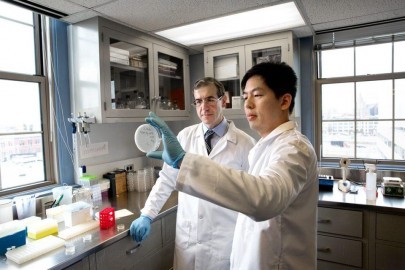
A new class of antibiotics, chemically related to vitamin A have shown early promise by killing MRSA in mice.
The research reported today in Nature and led by researchers at Brown University, used an assay which tested the ability of 82,000 synthetic compounds to stop MRSA from killing tiny worms called C.elegans. They identified almost 200 promising compounds that eradicated the bacteria, while not killing the worms and chose two to move forward with due to previous evidence they might be useful antibiotics.
Eleftherios Mylonakis, MD, leader of the study from the Medical School of Brown University said: “We are very optimistic about the way these compounds function. They target the membrane, a very finely tuned part of the bacteria which is very susceptible to targeting by drugs.”
Two percent of healthy people carry MRSA in their noses, with one in three carrying some form of staphylococcus bacterium which isn’t antibiotic resistant, but MRSA poses a huge threat to those who have compromised immunity and can spread quickly in healthcare settings such as hospitals.
The most recent estimates from 2014 indicate that there are over 70,000 MRSA infections and 9,000 related deaths each year in the U.S, more deaths than from HIV. New treatments, and more importantly new treatments which MRSA does not easily evolve resistance to, are urgently needed and the current rate of progress on these treatments is simply not fast enough to tackle the speed of evolution of drug-resistant bacterial infections.
“Pharma companies have mostly abandoned this type of research, which has been devastating for the development of new antibiotics,” said Mylonakis.
Mylonakis is, unfortunately right. The development of new antibiotics has been hugely hampered by the exit of multiple, large pharmaceutical companies from the field, often determining it simply not profitable enough. However this may be changing, with a recent study published in the British Medical Journal indicating more focus, albeit a lot more scope for improvement.
The Brown University research also described that the drug was very effective and when combined with gentamicin, a common antibiotic already widely in use around the world.
“Using two different chemicals to bombard the bacterial cell simultaneously, makes it really difficult for them to evolve resistance,” said Mylonakis.
The MRSA didn’t become resistant to the new drug, even after 100 days of treatment. This, together with the way in which the drug works, makes the researchers confident that MRSA won’t easily evolve resistance to the antibiotic when used in people either.
Another big issue with MRSA and other drug-resistant bacterial infections is the ability to just stop growing for a while and lay dormant to avoid being killed by traditional antibiotics. These ‘persister cells’ are a key cause of resistance, but the compounds discovered by the study don’t need bacteria to be dividing in order to kill them.
The compounds tested by the researchers are members of a family of synthetic compounds closely related to vitamin A, called retinoids. Promisingly, there are over 4,000 natural and synthetic retinoids that have been previously described and scientists are hopeful that more antibiotics may be amongst this vast repository.
“We invite the scientific community to find and test compounds like these, which work in a specific way to tackle drug-resistant infections,” said Mylonakis.
Source: forbes
Ask me anything
Explore related questions