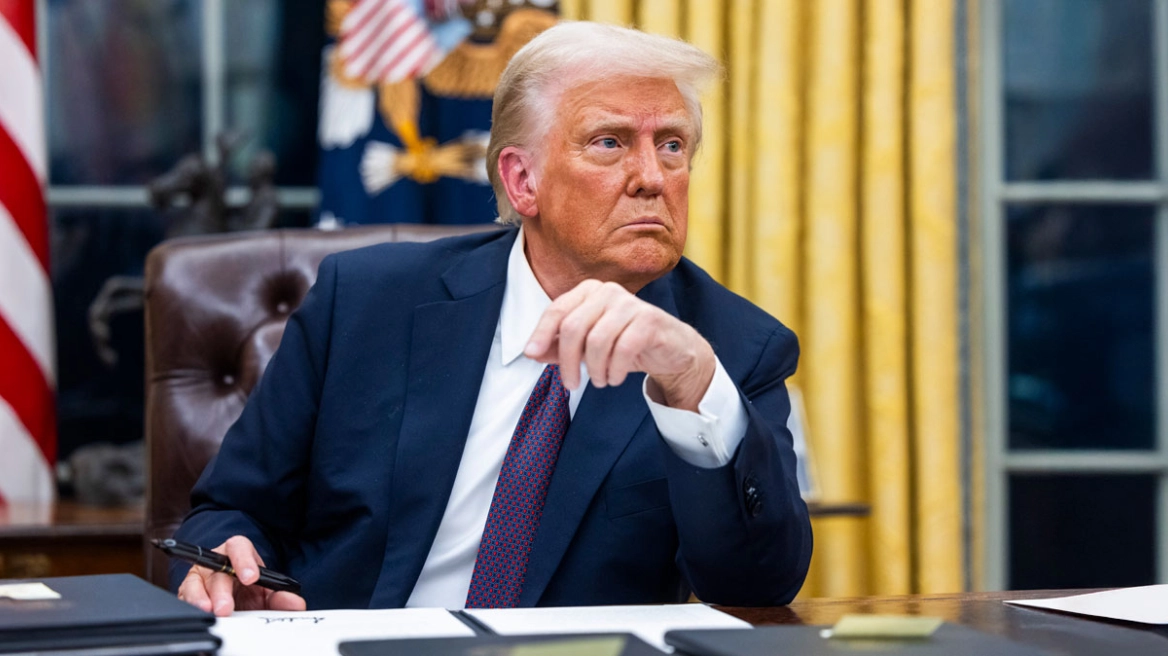





President Trump’s apocalyptic admonishment to North Korea over its threats to annihilate America suggested that he might be closer than ever to ordering an attack — without waiting for Kim Jong-un, the North Korean leader, to strike first.
Mr. Trump’s supporters have said that such a strike, should there be one, would be legally justified as an act of self-defense by the United States against a dangerous and irrational adversary. Others disagree, and many scholars of international law say the legal issues surrounding attacks in self-defense are complicated and subject to interpretation.
Here are some questions and answers on what can be considered legitimate self-defense under international law, and what the United States would need to demonstrate were it to invoke self-defense as the reason for attacking North Korea first:
How can a country even claim self-defense when attacking another country that has not attacked it?
The self-defense argument for such an attack is generally not recognized as valid. But there are situations in which a first strike can be interpreted as legally justified.
Michael N. Schmitt, a professor at the United States Naval War College and an affiliate at the Harvard Law School Program on International Law and Armed Conflict, said three basic requirements must be met: The other country must have the ability to attack; the other country’s behavior must show that an attack is imminent; and there must be no other ways to forestall it.
North Korea’s military power appears to have satisfied the first requirement. But under the second requirement, “we have to determine whether the statements by Kim are bluster or he actually intends to carry them out,” Mr. Schmitt said. Under the third requirement, he said, “you can only act in self-defense when if you don’t act, it’s going to be too late — there are no other options.”
Have those requirements been met yet?
While North Korea may have an ability to attack the United States, there is widespread skepticism that an attack is imminent. And many officials, including some of Mr. Trump’s senior aides, have said other options have not been exhausted.
“I think that the answer to the question is fairly unequivocally ‘no,’” said Kevin Jon Heller, a law professor at the University of London. “There’s no right of self-defense against a nonimminent threat.”
If the legal conditions for a first strike were met, would the destruction of North Korea, as critics of Mr. Trump say he implied when he threatened “fire and fury,” be legally justified?
Legal experts said an attack of self-defense in such circumstances must be “proportional” — meaning it is designed only to stop the threat. “It is not a carte blanche to destroy another country,” Mr. Schmitt said.
How do we know that Mr. Kim’s threat of attacking the United States is not an imminent threat?
We do not necessarily know. But North Korea has a well-established penchant for bombast and bluster, making threats without following through on them.
“Kim says all kinds of crazy things, with no history besides incendiary statements,” said Anthony Clark Arend, a professor of government and foreign service at Georgetown University.
At least some of the military planning for an attack by North Korea, including troop movements and missile launch preparations, would almost certainly be detected by satellites and other surveillance tools.
“If North Korea were preparing for an attack, you’d see it,” Mr. Arend said.
Is there anything in the United Nations Charter that permits one state to attack another before it is attacked?
That is a matter of debate. Article 2 of the charter prohibits states from using or threatening force against one another, while Article 51 does not prohibit the “inherent right of individual or collective self-defense if an armed attack occurs.” But Article 51 has been interpreted in different ways. According to the restrictive interpretation, an attack must happen before the attacked state can use force against the attacker. Less restrictive interpretations argue that a state threatened by attack does not need to wait to legally make a pre-attack strike.
What defines the imminence of an attack?
That is also a matter of debate and interpretation. In the 1967 Arab-Israeli war, when Israeli commanders ordered an attack after Egyptian forces massed on the border, “many people thought it was reasonable for Israel to conclude an attack was imminent,” said Ashley S. Deeks, a professor at the University of Virginia School of Law.
But in 1981, when Israeli jets destroyed an atomic reactor in Iraq on the grounds that it represented a threat, Israel was condemned in a unanimous Security Council resolution. Many said the standard of an imminent threat had not been met.
What constitutes imminence has been further muddied by terrorist groups, cyberattacks and other more nebulous threats. “We’ve had conversations with allies, and they agree that the idea of imminence can’t just mean right as a weapon is lifting off the launchpad,” Ms. Deeks said.
What is the origin of legality for a pre-attack strike?
Most scholars point to a doctrine established after what is known as the Caroline incident of 1837, named for an American-owned steamship suspected of supplying Canadian rebels against British rule. The ship, moored on the American side of the Niagara River, was boarded by British soldiers who killed several Americans, set the vessel ablaze and sent it over Niagara Falls. The British claimed they were acting in self-defense, an argument rejected by Secretary of State Daniel Webster.
The matter was settled with an agreement on the conditions constituting legitimate self-defense in anticipation of an attack. As Webster described it, a state must show that the “necessity of that self-defense is instant, overwhelming and leaving no choice of means and no moment for deliberation.”
Ask me anything
Explore related questions