




The Hellenic Film and Audiovisual Center – Creative Greece (EKKOMEΔ) is funding high-profile international productions filming in Greece, boosting investment and know-how. The sector contributes €1 billion to the economy, with a multiplier effect of €4.2 for every €1 of public support.
The schedule is tight, as filming is set to begin any day now. Cameras must start rolling immediately, and dozens of crews have already been mobilized.
One year after the major production of The Odyssey by director Christopher Nolan, Greece is once again positioning itself prominently on the map of major international productions.

According to reliable sources, several additional international projects are scheduled for the coming months. Interest is not limited to the United States and Europe; production companies from India and China have also made initial contacts in Greece.
A Five-Year Plan
Behind this international momentum lies a deliberate strategic shift. The Hellenic Film and Audiovisual Center – Creative Greece (EKKOMEΔ), following a directive from the Cabinet, has drawn up a five-year plan for the audiovisual sector. The aim is to move away from fragmented annual decisions and establish predictability, continuity, and long-term depth.
The goal is to create a framework that allows both domestic and foreign productions to plan well into the future.
According to a recent study on the economic impact of the incentive program, recent years’ activity has generated nearly €1 billion for the Greek economy. For every €1 of public funding, approximately €4.2 is returned in added value, employment, and secondary effects.
In 2025, according to EKKOMEΔ, €120 million was disbursed to domestic and foreign productions—a level expected to continue in 2026.
“We are no longer talking about outstanding debts, but about a regular flow of funding,” notes CEO Leonidas Christopoulos, explaining that the audiovisual sector is now treated as a productive industry with long-term planning, steady capital flow, and a strong multiplier effect on the economy.
At the heart of the new strategy is predictability in financial tools. For productions, the key factor is not only the amount of support but the certainty that the system will function smoothly.
“If you don’t know the tool will still exist in three years, you can’t plan seriously,” Christopoulos emphasizes.

From Art House to Industry
The merger of the Greek Film Centre (EKK) with EKOME and the creation of EKKOMEΔ marked a shift from viewing art-house cinema as an end in itself to understanding film as part of a broader productive ecosystem.
Previously, smaller sums were distributed across many projects. Now the focus is on fewer projects with larger budgets, better production preparation, and clearer international distribution plans.
The annual budget for selective funding programs has increased significantly, aiming to support fewer films but with stronger production value and real international prospects.
The 2024 Shock
The year 2024 functioned as a stress test for the entire ecosystem. The freeze of the cash rebate program and the accumulation of pending payments created significant uncertainty for both domestic and foreign productions.
The creation of EKKOMEΔ marked a restart effort. Restoring credibility and clearing overdue payments were immediate priorities, allowing the market to return to normal operations.
A study by Olsberg•SPI in collaboration with IOBE evaluated, for the first time, the audiovisual sector as a productive mechanism. Between 2018 and 2025, activity generated through incentives produced nearly €1 billion in gross added value.
On average, the sector supported around 2,900 full-time equivalent jobs annually. Under certain conditions, the economic multiplier could potentially rise to 6.5—meaning every €1 invested could yield up to €6.5 in return.
Filming in Hydra: From Sophia Loren to Brad Pitt
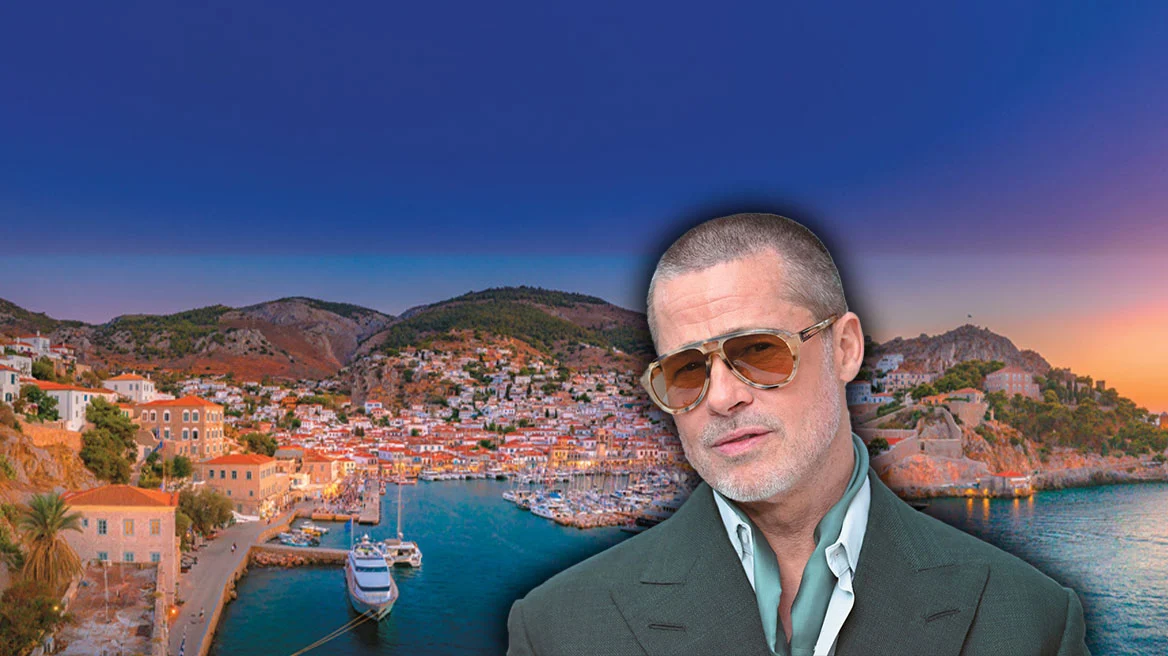
Despite deliberately vague reports about the filming schedule for the Hollywood production The Riders, Brad Pitt is expected to be in Hydra around February 20–21. As locals humorously put it, “This year’s Hydra Carnival guest star will be Brad Pitt.”
Filming is expected to begin on February 21 and last approximately two weeks. Around 200 crew members are anticipated to stay on the island. Equipment and large-scale set pieces are already being transported from Piraeus to Hydra by ferry.
Several waterfront shops have been rented to serve either as storage spaces or filming locations. Local residents will also participate as extras to add authenticity to outdoor scenes.
The exact filming locations—especially those involving Brad Pitt—remain strictly confidential. However, given Hydra’s limited geography, the island’s most picturesque spots—its harbor, cobblestone alleys, and panoramic viewpoints—are likely to appear in the film.
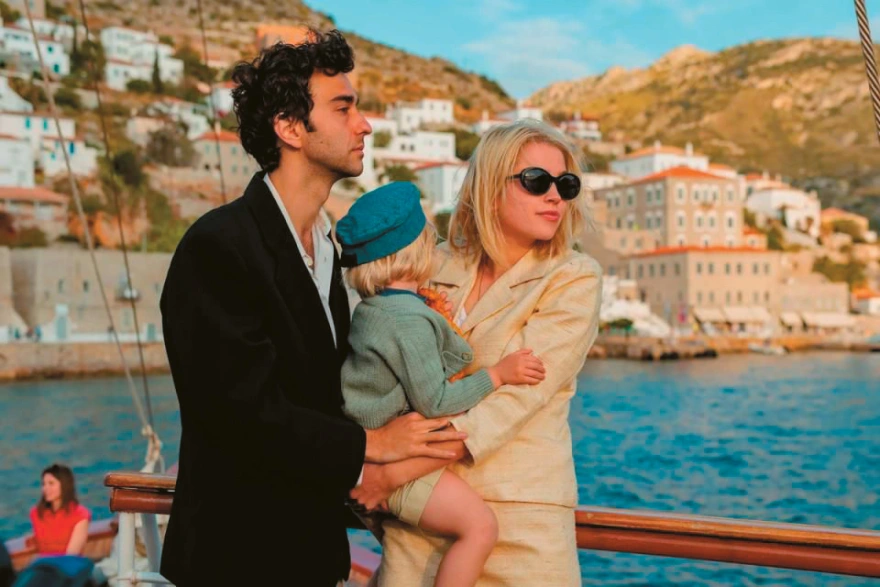
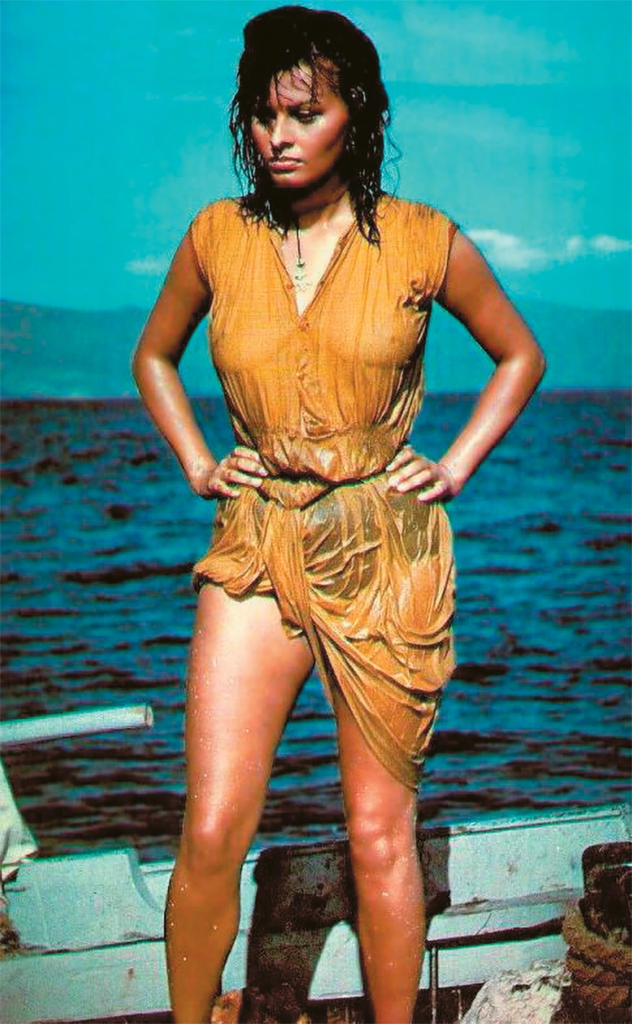
Hydra has long been a favorite of international productions, beginning with the 1957 classic Boy on a Dolphin, starring Sophia Loren. Since then, numerous Greek and international films and series have been shot there, establishing Hydra as one of Greece’s most cinematic and film-friendly islands.
With The Riders, the bar is raised even higher—bringing Hollywood back to Greece in spectacular fashion.
Ask me anything
Explore related questions