




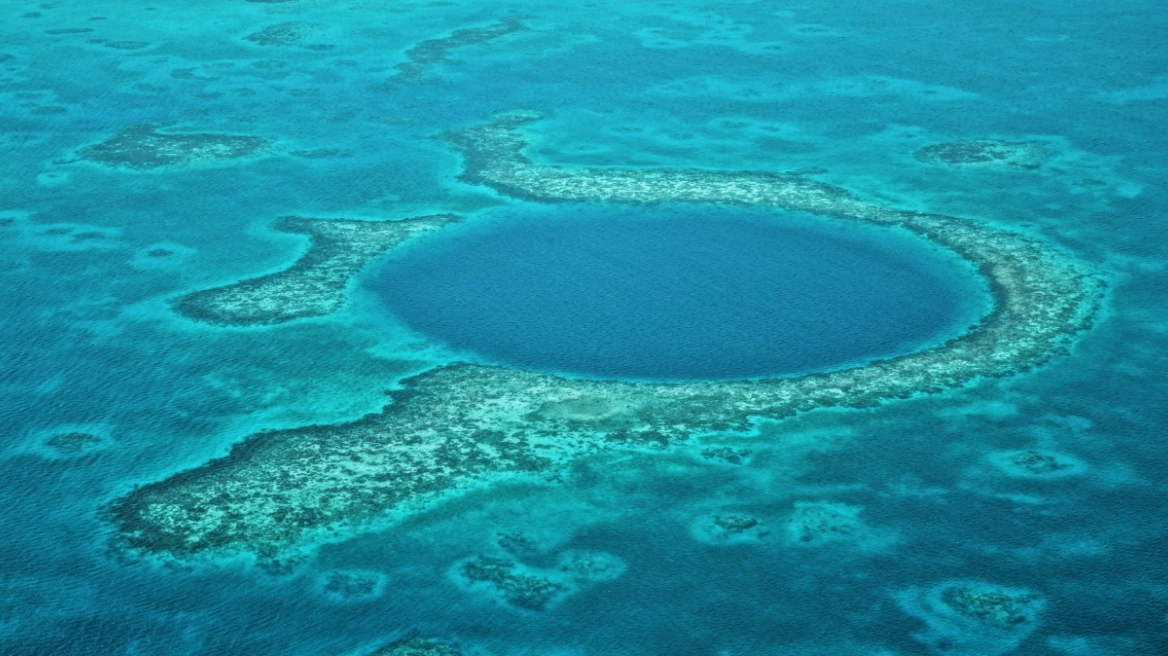
An underwater geological phenomenon off the coast of Mexico has left scientists with more questions than answers. It is the deepest known blue hole in the world, reaching a depth of over 420 meters, although the exact location of its bottom has not yet been confirmed.
The underwater sinkhole is known as Taam Ja’, which in the Mayan language means “deep water.” It is located near the Yucatán Peninsula in Mexico and was discovered just over 20 years ago by a local diver. From the surface, it is difficult to see, adding to the sense of mystery surrounding this impressive natural formation.
In 2021, researchers attempted to measure its depth using an echo sounder, which sends sound waves to the seafloor and records their reflection. The first estimate suggested a depth of 275 meters. However, a 2023 expedition found that the sinkhole reaches at least 420 meters, though it is unclear whether this is its final depth.
For measurements, a specialized CTD device (Conductivity, Temperature, and Depth profiler) was used. Through pressure sensors, it records the water’s conductivity, temperature, and depth, allowing for more accurate estimates.
Blue holes are naturally formed cavities on the seabed with vertical walls, mainly in coastal areas. They usually form in regions where the subsoil consists of soft rocks, such as limestone, which erode over time, leading to collapses and the creation of cavities.
Most sinkholes are only a few dozen meters deep, though they are often connected to extensive underwater cave systems. They are characterized by limited water circulation and very low oxygen levels at great depths, making it difficult for most organisms to survive beyond microbial life.
While Taam Ja’ is now considered the deepest known blue hole, another famous example is the Great Blue Hole in Belize. In 2018, Richard Branson and Fabien Cousteau—grandson of French explorer Jacques-Yves Cousteau—dived there in separate submersibles.
During the dive, they encountered a layer of hydrogen sulfide at around 91 meters, beneath which the water was dark and lifeless. At the presumed bottom, they found trash, including a two-liter plastic bottle and a lost GoPro containing vacation photos.
Two bodies were also discovered, believed to belong to explorers who had gone missing on an earlier mission.
Branson later stated on Virgin’s website that the Great Blue Hole is part of a complex cave system formed when the area was on dry land. He noted that it is evidence of how rapidly and destructively sea levels can rise.
As he explained, 10,000 years ago, global sea levels rose roughly 300 feet when massive amounts of ice melted, leaving visible traces of the transition from land to sea on the walls of the formation.
Despite research, Taam Ja’ continues to raise questions, with scientists still unsure whether the 420 meters represent its true depth or if the “deep water” hides even greater secrets.
Ask me anything
Explore related questions