





Cases of espionage in favor of China have increased exponentially since the start of this year’s autumn, at a time of intensified global geopolitical uncertainty, which has triggered alarm among European authorities.
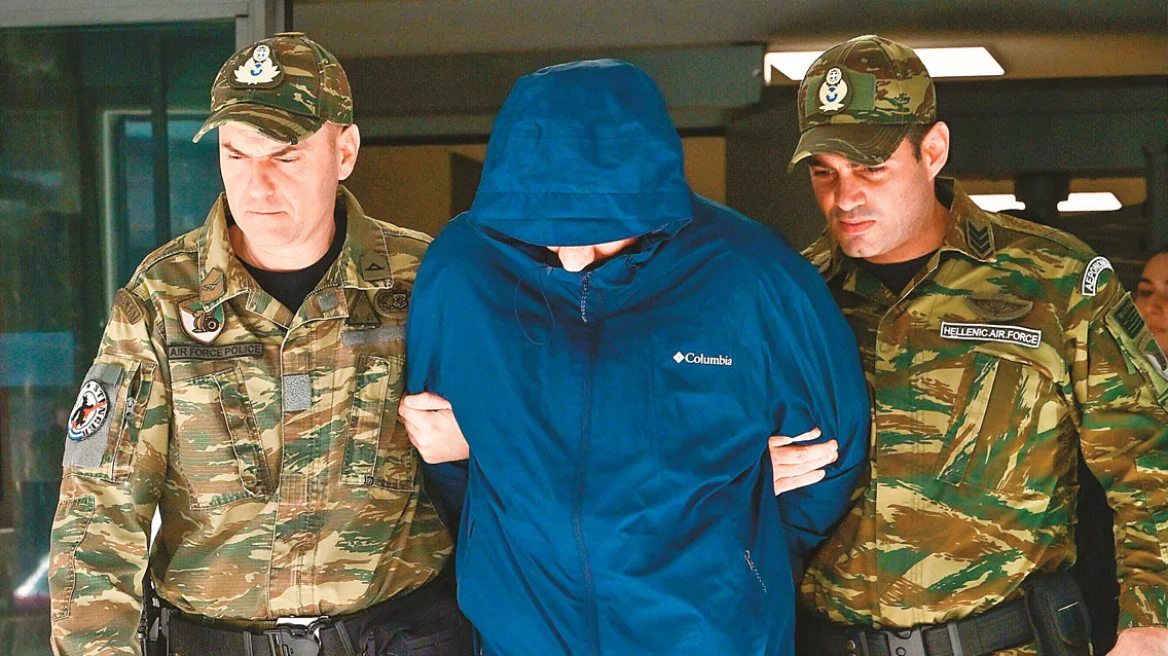
The arrest “within military premises” of a 54-year-old wing commander, telecommunications engineer, and unit commander in Kavouri earlier this week not only triggered a general alert in the Greek Pentagon regarding the possible existence of an extensive espionage network within the domestic Armed Forces, but also heightened security levels across NATO formations, which increasingly detect a “rise in Beijing’s activity,” with particular focus on defense technology.
Although in the U.S. the scale of Chinese military espionage is overwhelming and largely known to Congress members, since 2025 China appears to have been “pressing” its networks in Europe, targeting specific profiles, according to credible military sources.
The “Ideal” Profile
China’s top targets are active military personnel, followed by political party officials, academics specializing in international relations and military studies, research institutes, and influential public figures.
Initial approaches are made either via social media or through technology companies interacting with targets at conferences and other sector events, framed as purely professional collaboration, often with a horizon extending after the target’s retirement.
Particularly sought after are officers involved in NATO planning, specialists in satellite systems, emerging technologies, telecommunications, and AI—mainly because their military salaries are far lower than the substantial pay offered in the private sector—as well as high-ranking officers aiming for promotion.
It is no coincidence that the arrested 54-year-old wing commander had completed both ADISPO and SETHA programs, reflecting his ambition to rise to senior command, gaining even greater access to highly classified information. Such a position would allow him to recruit lower-ranking personnel and enjoy greater perks due to the significance of the intelligence he could provide.
Reports suggest that procedures were already in motion for his promotion to brigadier general next year.
His colleagues had long noticed his continuous professional advancement: he was not an “average officer,” according to military sources, and systematically attended trainings and “schools” on highly advanced electronic systems.
It was not just his constant updating of expertise, nor his NATO-certified evaluator role in communications and intelligence, but also his theoretical reflections on military practice and defense technology that revealed a highly ambitious, structured personality.
Studying China
For example, in real-time review of relevant literature, in an article on AI in warfare, the arrested spy wrote that “these systems evolve to extract reliable conclusions for their use on future battlefields,” adding that “the most important factor in the evolution of these technologies remains the human being and how they perceive their environment.”
Regarding global powers’ stance on AI, he noted that “as early as July 20, 2017, the Chinese government published a strategy detailing its plan to achieve global leadership in AI by 2030,” adding that “the technological race for AI and autonomous systems began long before the U.S. Department of Defense adopted a high-power competition strategy in 2018.”
In 2021, the arrested officer served in Cyprus, a fact the authorities now recognize, given the strong Chinese and Russian presence on the island.
Fears and Concerns
The targeting of highly specialized officers in new technologies and telecommunications by Chinese espionage has deeply concerned the Pentagon. Due to the technological revolution in defense (AI and unmanned systems), their roles cut across branches, and such officers are placed in the most critical positions in new Armed Forces structures.
From this perspective, General Staffs are reportedly conducting informal “scans” of senior and higher-ranking officers, as Greece’s role in NATO’s southeastern flank increases Chinese interest in a highly sensitive time and political context for the Southeastern Mediterranean.
Greek military leadership is already investigating the arrested wing commander’s network, including close and broader professional contacts, as well as recent incidents unrelated to military activity.
Meanwhile, alarm has grown over the officer’s use of a device with “non-Western” software, allegedly supplied by Chinese actors, capable of transmitting data and intelligence via espionage technology undetectable by the West.
The “Message”
Military sources suggest a possible core of officers around the arrested commander may be involved, due to strong Chinese interest in Piraeus and the deepening Greece-U.S. strategic relationship. Notably, the arrest coincided with Defense Minister Nikos Dendias’ visit to the U.S. Pentagon, as the officer’s activities reportedly came to Greek authorities via the Atlantic.
The official announcement by the Hellenic National Defense General Staff also serves as an “internal message,” indirectly warning Armed Forces personnel about China’s escalating “friendly attack” approach. Particularly concerning is that Chinese networks focus on “elite specialties,” such as the 54-year-old commander’s role, linked to critical infrastructure like airborne radar and fighter jet self-protection systems.
Allied intelligence cooperation is simultaneously exposing China’s espionage web in Europe, with a dense series of cases from autumn 2025 onward, targeting European armed forces, defense industry, and radical political factions.
The domino effect began in Germany last September, when a former aide to a far-right MEP (AfD) was convicted of spying for China, described by the German press as the most serious case from Beijing in recent years. The Chinese spy downloaded sensitive European Parliament documents to a USB stick and handed them to a Chinese intelligence officer in 2024, along with information on military aircraft, passenger lists, weapons shipments, and troop movements.
MI5 in the UK has also detected intensive attempts to obtain sensitive information from China over the past three years, and hours before the Greek wing commander’s arrest, four individuals were arrested in France for spying for China—two Chinese nationals posing as engineers and two others engaged in international espionage near a critical facility.
Their arrests were triggered by repeated internet outages in a local community, revealing a satellite dish on a rented property in southwestern France serving as a spy hideout. Military sources suggest the near-simultaneous arrests in Greece and France may involve the same Chinese espionage network on European soil, explaining coordinated Greek-French action.
The Importance of IMEC
China’s expansion of its European espionage network, creating “heightened alert conditions,” is linked to Greece’s high-level strategy, strengthening ties with:
- the U.S.
- France
- Israel
- India
Greece aims to act as a “bridge state,” advancing the creation of the IMEC corridor (India-Middle East-Europe Economic Corridor), connecting Europe and Asia via the Middle East through ports, rail, and road infrastructure. The growing strategic value of the ports of Piraeus and Thessaloniki has raised Beijing’s concern, especially as EU-India trade deal preparations intensified in late 2025, coinciding with the spike in Chinese espionage in Europe.
For international analysts, the EU-India agreement solidifies the partnership in the global system amid intense geopolitical turbulence, as competition between China and India escalates sharply in their respective spheres of influence.
Ask me anything
Explore related questions