




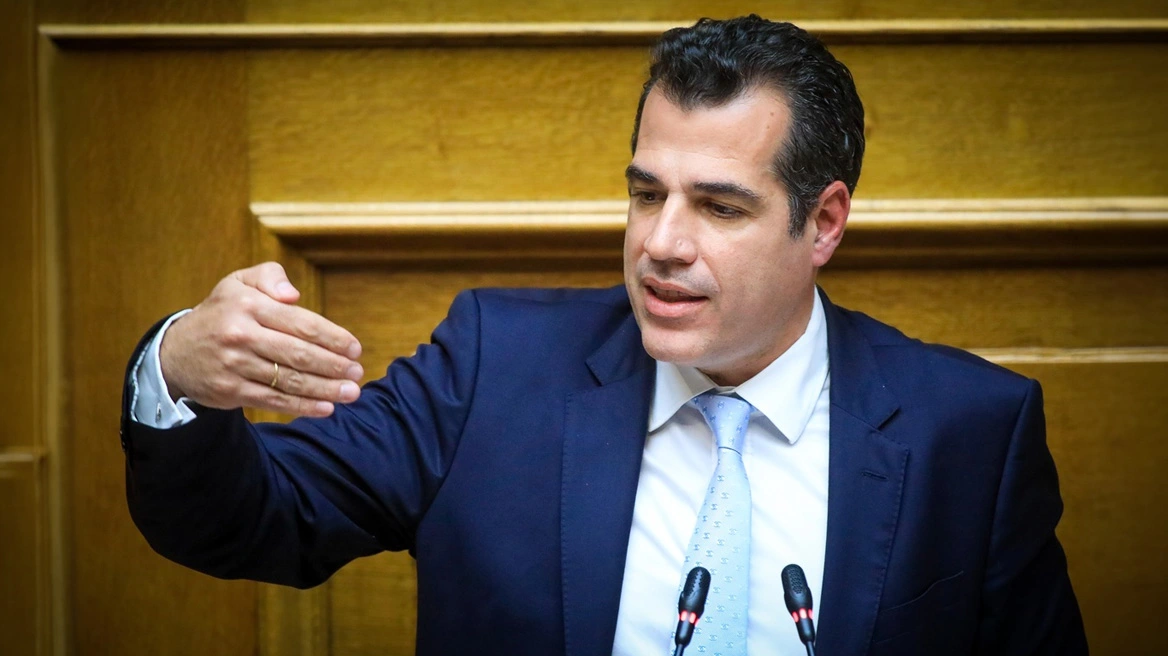
Speaking in Parliament, Thanos Plevris outlined the government’s new, stricter migration policy doctrine, noting that those who are not entitled to asylum will be required to choose between “return or prison,” while members of NGOs who participate in illegal human-smuggling networks will face tougher criminal penalties.
The Minister of Migration and Asylum argued that the new strategy has a deterrent effect and is producing results. “2025 ended with fewer arrivals compared to 2024. Over the past five months, arrivals have fallen by 40% due to the measures we took,” he said, adding elsewhere: “We consciously believe that a tough migration policy, combined with diplomacy and border protection, delivers results. The borders are being guarded, and it is shameful to question the efforts of the Hellenic Coast Guard. They save lives — not the professional humanitarians.”
At the same time, he presented provisions that will allow legal migrants to renew their permits through simple and fast procedures, as well as measures aimed at integrating asylum beneficiaries into the labor market instead of remaining in the country while receiving benefits.
“Until now, those granted asylum entered benefit programs and we lost track of them. We are changing this and introducing pre-integration procedures. Those who arrive and have the profile of a person entitled to international protection will be taken to facilities such as the one we have in Koutsochero. There, they will attend programs to learn the Greek language and acquire professional skills, so that we can then connect them with the labor market (agriculture, tourism, construction, catering, etc.),” Mr. Plevris said, adding: “From now on, asylum will not be granted at the expense of taxpayers. We will give them the opportunity to learn basic Greek and skills so they can work. If they do not want to work, they will leave; they will not live at the expense of Greek taxpayers.”
Further explaining the new plan, he said that the country’s approximately 30 reception facilities will be divided into two main categories. “The first will include closed facilities, where migrants without a refugee profile will be taken. Egyptians, Bangladeshis, etc., will go there. Their asylum applications will be examined, and if rejected, they will be returned to their country or sent to prison. The second category will include open facilities, such as the one in Koutsochero, where people who are likely to receive asylum will be taken. They will go there instead of Kypseli and Agios Panteleimonas.”
Addressing the opposition, the minister noted that they submitted no comments on these specific provisions, adding: “You submitted comments only regarding NGOs, for which we are tightening the framework when their members are involved in smuggling networks. In other words, we are tightening the framework for smugglers, and we are also saying that if a smuggler — like the one in Chios who drove a boat carrying 30 migrants into a Coast Guard vessel — is a member of an NGO, he will face an even harsher penalty. Someone who is paid by the Ministry to run its programs will bear greater responsibility. Anyone working in our facilities must have greater accountability.”
Specifically regarding NGOs, he said that the proposed provisions abolish the “privileged process of direct awards.” “Until now, NGOs received projects without competitive tenders. Overall, civil society organizations have received €300 million from the Ministry, so we cannot talk about volunteer humanitarians; we can talk about professional humanitarians. From now on, anyone who wants to receive projects will participate in a tender.”
The minister also addressed criticism from the opposition concerning provisions related to unaccompanied minors and presented findings from biometric tests to Parliament. “By the end of 2025, we had 2,003 unaccompanied minors in the facilities, of whom 95% were aged 16 and over. Fifty-seven percent were 17 years old,” he said, adding: “We checked 197 suspected cases of individuals claiming to be minors using biometric tests. Of these, 123 turned out to be adults.”
Ask me anything
Explore related questions