




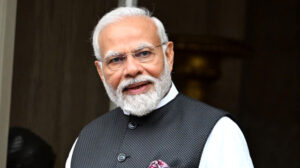
India’s prime minister, Narendra Modi, chose to “welcome” the free trade agreement between his country and the European Union, giving a symbolic character to the importance of the agreement for bilateral relations.
“The conclusion of the India-EU FTA today marks an important milestone in our relations,” he said in his post, underlining the significance of the development.
The significance of the importance of the agreement is also highlighted in the statement.
The Indian Prime Minister also thanked the European leaders, noting: “I thank all the leaders of Europe over the years for their constructive spirit and commitment to achieving this goal.”
He said, “This agreement will deepen economic ties, create opportunities for our peoples and strengthen the India-Europe partnership for a prosperous future,” attributing long-term strategic importance to the agreement.
Indian Prime Minister Narendra Modi has made similar posts in all languages of European Union member states, sending a message of unity and direct communication to European citizens.
Win – win Europe’s big deal with India
The new EU-India trade deal opens the door to the world’s most populous country, with 1.45 billion people and the fastest-growing major economy, offering European businesses preferential access and significant trade benefits.
The agreement calls for the elimination or drastic reduction of high, often prohibitive tariffs, particularly on European Union agri-food products, which currently average more than 36%. This development opens up a huge market for European – and Greek – producers, while maintaining full protection for the EU’s sensitive agricultural sectors.
Under the agreement, tariffs on European wine will be reduced from 150% to 75% on entry into force and gradually to 20%, while tariffs on olive oil will be reduced from 45% to 0% over five years. Significant reductions are also planned for processed agricultural products, such as bread and pastries, with cuts of up to 50%.
At the same time, beef, chicken, rice, and sugar are exempt from market liberalisation, while all Indian imports will continue to comply with strict EU health and food safety rules.
European and Greek products – How tariffs change
India grants the EU unprecedented tariff reductions, larger than those it has offered to any other trading partner. European exports of machinery and electrical equipment, worth €16.3 billion, are currently subject to a 44% tariff, which will be reduced to 0% in 5-7 years
Similarly, tariffs on aircraft (11%) and medical and surgical equipment (27.5%) are set to be reduced to zero, while for plastic products worth €2.2 billion and chemicals worth €3.2 billion, tariffs will be phased out over the next decade.
Of particular interest to Greece are products such as wine, hard liquor, olive oil, and kiwifruit, given that Greece is the world’s third largest exporter of kiwifruit.
Ask me anything
Explore related questions