




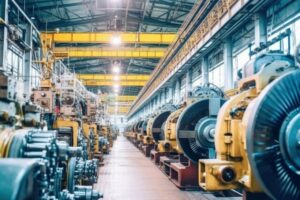
With a clear competitive disadvantage in energy costs compared to Central Europe, Greek industry is facing an acute energy impasse. The European Commission’s “no” to the implementation of the so-called Italian model for industrial electricity highlights the structural weaknesses of the Greek electricity market and the delays in activating support measures, while Italy and Germany have already secured lower energy costs for their industries.
At the centre of the criticism is EVIKEN, which cites a distorted picture that is often presented of Greece’s position on the European electricity price map. It points out that official comparisons that rank the country in 7th to 10th place within the EU omit a crucial element: the extremely high cost of balancing the market.
The Greek electricity market is burdened with an additional cost of 20 euros per megawatt hour, which does not occur with the same intensity in other European countries. If this cost is taken into account, Greece is among the most expensive electricity markets in Europe. This is a structural characteristic of the domestic market, which is not easily changed and which has undermined the competitiveness of industrial production over time.
The gap with Central Europe
The problem is most clearly reflected in a comparison with the main markets to which Greek industry exports. According to data cited by Antonis Kontoleon of the Industrial Consumers Association, while Germany is setting electricity prices for its industry close to 50 euros per megawatt-hour (based on the new European CISAF mechanism and despite its objections to its architecture) and Italy is in the region of 62.5 euros/MWh, Greece remains firmly above 100 euros/MWh, once all charges are taken into account.
Ask me anything
Explore related questions