





Storm Goretti struck Northern Europe on Friday, causing widespread power outages, flight cancellations and disruptions to rail services in France, Britain and Germany.
Although the red warning for strong winds covering Cornwall and the Isles of Scilly has now expired, the impacts of the severe weather remain extensive. According to the UK’s Met Office, wind gusts of up to 99 miles per hour (159 km/h) were recorded at St Mary’s Airport on the Isles of Scilly, marking a historic record for the area.
Significant problems have also been reported in transport, as Birmingham Airport suspended runway operations due to heavy snowfall.

At the same time, dozens of schools in parts of the Midlands and Wales will remain closed, as further heavy snowfall is expected.
The storm left around 380,000 homes without power in France, mainly in Normandy and Brittany, while 57,000 homes in Scotland and parts of central England were also left without electricity, as schools were closed. In the Netherlands, flights were cancelled due to heavy snowfall after a brief day of respite.
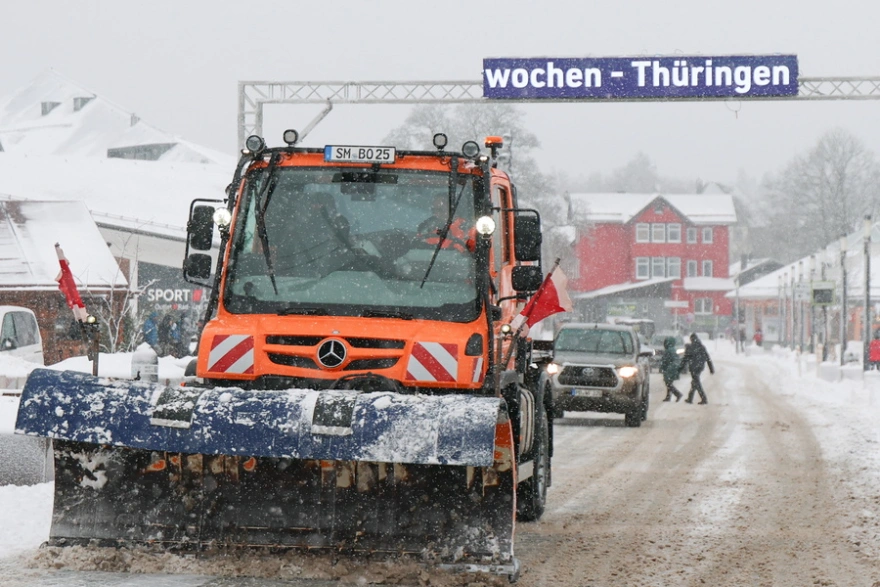
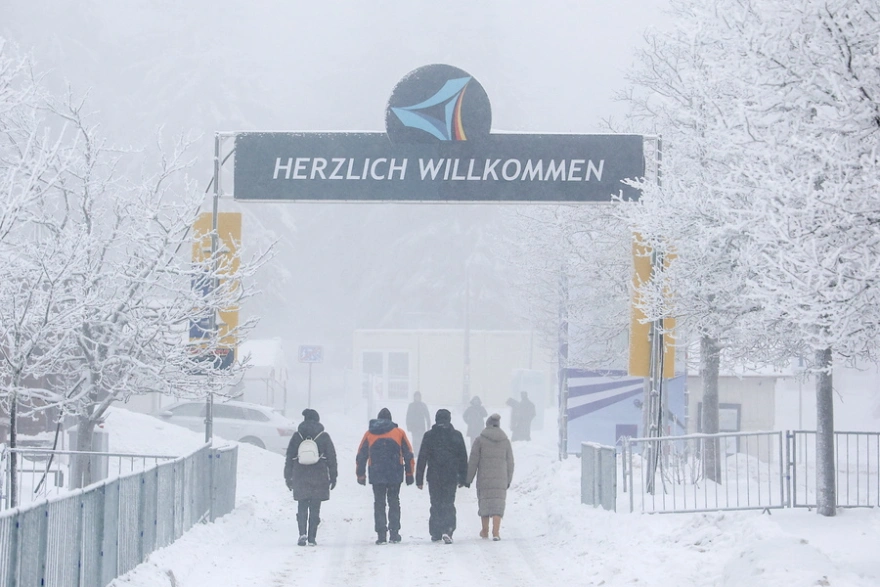
In Germany, an official said the storm was one of the most severe in the region in recent years.

In northern France, winds exceeded 150 km/h, with a record of 213 km/h in Barfleur, forcing the national rail operator SNCF to suspend services between Paris and Normandy. State energy company EDF reported that the storm affected electricity production at the Flamanville nuclear power plant, resulting in reactors 1 and 3 being taken offline due to a high-voltage outage.

In Germany, Deutsche Bahn suspended long-distance services, warning passengers not to travel as the storm continues to affect the country. At Hamburg Airport, around 40 flights were cancelled, while in the Netherlands KLM cancelled 80 flights to and from Amsterdam’s Schiphol Airport.


Ask me anything
Explore related questions