





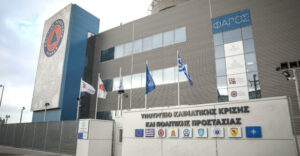
As announced by Civil Protection authorities, an Operational Incident Center will operate within each Regional Fire Service Command, fully interconnected with the National Coordination Center for Operations and Crisis Management (ESKEDIK). The aim is to ensure a unified operational picture in real time, from the local to the national level, allowing for faster and more effective decision-making.
A central pillar of this reform is also the introduction of standardized command and operational response protocols, based on the internationally recognized Incident Command System (ICS).
The Incident Command System is a globally tested and acknowledged all-hazards incident management model, developed and systematically applied as early as the 1970s and 1980s in the United States and Canada—countries considered pioneers in civil protection and wildfire suppression. By following this model, Greece will for the first time institutionally approach the level of these systems, adopting key principles such as the functional integration of all plans and procedures (Rules of Engagement, General Plans, operation of the National Mechanism), the development of a unified strategic, operational, and tactical command framework, and the institutionalization of tactical field command elements.
How the Operational Incident Centers will work
According to Civil Protection sources, the new operational structure to be established through the bill—namely the Operational Incident Center—will function as a central hub for coordination, communication, and information flow among all involved agencies. Essentially, it will be a small ESKEDIK, equipped with communication systems, satellite maps, technical support, and all the tools required for rapid and well-documented assessment of operational data, particularly during the wildfire season.
In practical terms, Greece will acquire a network of autonomous operational centers distributed throughout the country, fully interconnected with ESKEDIK, thus upgrading national-level coordination in line with international best practices.
Specifically, the Operational Incident Centers will embody the principle of “one operation – one command” and will operate as local and regional “war rooms.” Permanent liaison officers from the Civil Protection Coordination Body (SOPP), the Regional Civil Protection Coordination Body (PESOPP), and the Local Civil Protection Coordination Body (TESOPP) will be present, along with representatives of volunteer organizations and NGOs registered with the Civil Protection Registry—or even outside it—such as the Hellenic Network of Resilient Cities or Forest Protection and Development Associations.
The goal of this change, according to Civil Protection sources, is to establish a modern, interoperable command structure that overcomes weaknesses observed in previous crises, where the lack of unified coordination led to major disasters and tragedies.
Drawing inspiration from international centers in the United States and Canada (Incident Command Post) as well as Italy (Sala Operativa / Direttore Operazioni Spegnimento), the Operational Incident Center will follow these models for modern crisis management in Greece. Civil Protection officials stress that this reform represents a profound institutional shift, upgrading on-site command from an improvised coordination practice to a legally established central operational tool of the National Mechanism.
The objectives of this new model include faster decision-making, reducing the risk of incompatible or contradictory orders, enhancing the safety of personnel and citizens, ensuring transparency in public information through a single center, and fostering a culture of modern, evidence-based, and preventive crisis management.
What the Incident Command System brings and how it will be implemented
The Incident Command System (ICS) is a globally tested and widely used model for managing all types of incidents, from natural disasters to technological or complex emergencies. Its purpose is for all involved agencies to adopt a unified and integrated organizational structure capable of meeting increased demands and complexity. This ensures a common command approach, clear role allocation, and a unified operational “language” among all competent services.
Within the framework of civil protection—and especially firefighting—the ICS is expected to be applied at three levels of risk management:
- Strategic level, through the strengthening of ESKEDIK and the use of specialized functions such as operational meteorology.
- Operational level, via the operation of the new Operational Incident Centers.
- Tactical level, through the establishment of a field command element interconnected with Mobile Operational Centers (such as “Olympus”), enabling unified coordination of all operational agencies.
For other disasters falling under the National Crisis Management Mechanism, the ICS approach also предусматриes the development of Joint Operational Protocols.
According to Civil Protection authorities, the proposed bill also provides for unified operational rules and structures aligned with ICS principles. Specifically:
- Field command systems and elements will be established to create a unified coordination hub, where the head of the Hellenic Fire Service and liaison officers from all involved operational agencies (Hellenic Police, Armed Forces, Hellenic Coast Guard, and the National Emergency Aid Center – EKAV) form a shared operational picture, ensure immediate exchange of critical information, and make coordinated decisions.
- The operation of 13 Operational Incident Centers (EKS) is предусмотрed within each Regional Operations Center of the Regional Fire Service Commands, operationally interconnected with the National Coordination Center for Operations and Crisis Management (ESKEDIK). Their purpose is to “diffuse” a unified operational picture to and from the Civil Protection Coordination Bodies (SOPP), Regional Operational Coordination Bodies (PESOPP), and Local Operational Coordination Bodies (TESOPP).
- At the same time, standardized protocols and Rules of Engagement for the Hellenic Fire Service are introduced, defining a clear command framework, mobilization procedures, and levels of authority for all personnel.
In summary, according to Civil Protection sources, this reform marks the gradual transition of the National Mechanism to a modern, internationally recognized incident command model. Through the institutional integration of ICS, the introduction of joint operational action plans for security forces, and the establishment of tactical field command elements, the aim is to eliminate coordination weaknesses, enhance the speed and quality of decision-making, and ensure that every major disaster is managed with a unified language, a single plan, and clear allocation of responsibilities.
Ask me anything
Explore related questions