




Reviewing the economic criteria to make them effective in terms of housing policies in our country is recorded as imperative by the special study presented in the 61st economic bulletin of the TFE.
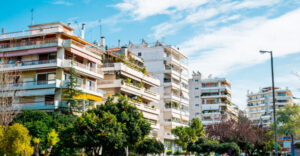
33% of Greeks spend 40% of their income on housing, while the phenomenon is particularly pronounced in large urban areas, with the result that households are unable to save and end up forcibly changing their consumption habits.
What can be done
The above study, which attempts to answer such questions, under the title “The affordability of housing for Greek households”, is edited by Mr Nikolaos Vettas, Mr Giorgos Gatopoulos, Mr Alexandros Louka, Mr Antonis Mavropoulos, and Mr Sotirios Saperas.
The most common definition of housing affordability is expressed as the percentage of households that spend more than 40% of their disposable income on housing costs.
One third of Greeks spend 40% of their income on housing needs
According to the latest available Eurostat data, Greece is in the worst position among the EU member states in terms of housing affordability. Indicatively, in Greece almost 1/3 of households in urban areas are recorded as spending more than 40% of their disposable income on housing-related costs, including utility bills, rents, mortgage payments and financial charges. In conditions of rising house prices and energy costs and high borrowing costs, housing costs are gradually rising, making housing even less affordable for domestic households. At the same time, public spending on housing as a percentage of GDP is among the lowest among member states.
Greeks are not saving because of housing costs
Greek households are being asked to adjust their consumption patterns as housing demand is generally inelastic. On the other hand, the accumulation of wealth through savings is hampered, which has a direct impact on investment in the real economy, but also on the financial system.
Housing affordability in the Greek context is a major challenge for domestic households, more than any other EU Member State, as demonstrated by EU-SILC data.
The study confirms the existence of an unaffordable housing problem which is getting worse, with significant regional heterogeneity. The combination of an increasing share of income spent on housing and an increase in the excess housing cost index suggests structural changes in housing costs, household incomes, and population composition.
Who gets hit the hardest
renters, the unemployed, younger households, those with lower educational attainment and smaller households are those who face the most barriers to accessing affordable housing.
Moreover, according to the findings of the Eurostat reports – albeit at a more detailed geographical level – the degree of urbanisation has a significant impact on housing affordability: in urban areas, and particularly in the two largest cities of Greece, Athens and Thessaloniki, households face higher housing costs compared to the rest of the country, which makes housing less affordable.
Policy Options – Improvement Moves
The study, based on both descriptive and empirical evidence and in line with international best practices, opens the debate on a range of policy options to address the problem of affordable housing in Greece. These could include.
-
- Targeted support for vulnerable households through housing subsidies and incentives for home ownership,
- Strategic expansion of social housing programmes,
- Enhance housing market regulations to stabilize rents and housing prices,
- Strengthening the supply of housing.
Moreover, as the current social housing policy in Greece is mainly based on benefits, it is necessary to revise the income criteria in order to improve the effectiveness of the programmes. Another policy option could be to normalize the housing market through stronger tenant protection, as practiced in Sweden and Germany.
Tackling supply issues includes:
-
-
- long-term transparency in planning rules and land use zoning regulations,
- simplification of real estate transfer procedures,
- limiting the negative impact of vacant housing and the short-term rental market,
- re-examine the Golden Visa programme, as Portugal has recently done.
-
Other ways to address the problem include:
-
-
-
- systematic collection and monitoring of rental data, as international examples show that having reliable data on rental contracts enhances policy effectiveness,
- tax incentives to formally register vacant dwellings or impose a tax on them,
- targeted tax reforms to boost investment in the rental market.
-
-
Overall, housing in Greece is a significant financial burden for many households, affecting consumption, wealth accumulation, and resilience to economic shocks. A comprehensive and balanced policy approach is therefore necessary.
Ask me anything
Explore related questions