





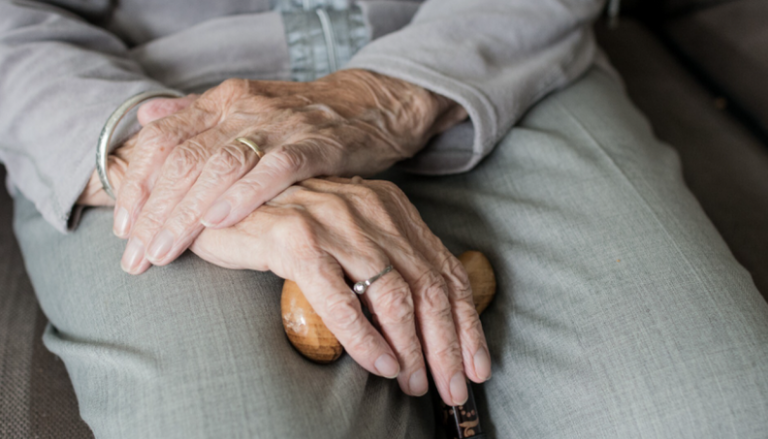
The natural balances (births-deaths) in Greece have changed, turning from positive to negative for the first time in our post-war history, essentially since 2010. The continued increase in the number of elderly has caused a increase in deaths that began in the early 1950s, while the continued decline in the number of children couples have had has caused a decline in births since 1980.
The inverse paths of deaths and births inevitably led to a predominance of the former over the latter, a predominance that has been steadily growing: 38.5k fewer births than deaths in the three-year period 2011-13 and 111k in 2017-2019 (113 deaths/100 births in the former and 143 in the latter). But in the three-year period 2020-22 the deficit widened significantly as the natural balance was negative by 169 almost a thousand, resulting in 168 deaths per 100 births.
These are some of the early findings reported in a digital bulletin from the Institute for Demographic Research and Studies (IDEM) on “The deterioration of the natural balance at national and regional level (2020-22) and its bleak prospects“. The two authors of this article (Prof. Vyron Kotsamanis and Vassilis Pappas, founding members of IDEM) also report that if the increase in deaths after returning to 130k in 2023 will be milder in the coming years, births per year will average well below 82k. 82 in 2020-22 as the number of women of childbearing age will continue to decline and no radical changes are expected in the broader family formation and childbearing environment.
The natural balances will therefore remain negative hovering around -55k, while the birth-to-death ratio, for all its fluctuations, is unlikely to change significantly in the future. The two researchers also report that variations in this ratio and its deviations from the three-year average for 2020-22 (1.68 deaths per birth nationally) are significant and widen as we move from Regions to Municipalities. They find in particular, analyzing the data, that at the level of regions, the South Aegean with slightly more births than deaths, is significantly differentiated from Western Macedonia where there are almost 2.4 deaths/births.
Deviations from the national average widen in Regional Units as in only five of them, births are significantly more than deaths and in four, deaths and births do not differ significantly, while, at the other extreme, eleven Regional Units have 2.5 or more deaths per birth.
At the municipal level (325 units), the differences between the Municipality of Thera with 2 births per death, and, at the other extreme, 49 municipalities (15% of the total) with more than 4 deaths/birth (and 20 of these with 6 or more) are staggering.
Finally, at the level of Municipal Units (MUs), the deviations from the national average (1.68) are even wider: if in 19 of them (2.1% of the total) births exceed deaths, in 27 we have only deaths, in 348 – one third -, 4 or more, and in 196 (19% of the total) 6 or more deaths per birth!
The vast majority of the island municipalities, the two researchers report, of the large urban centers as well as those of the metropolitan areas of Athens and Thessaloniki have positive or relatively balanced natural balances. On the contrary, the imbalance between births and deaths is most pronounced in the great majority of the Municipal Units located in the central and western part of mainland Greece as well as in Central-Eastern Macedonia and Thrace, where in 2020-22 there were usually 3 or more deaths per birth, while in this part of mainland Greece, almost all 27 Municipal Units that had no births in 2020-22, but only deaths, are located.
Speaking to the Athens-Macedonian News Agency, the director of the Institute of Demographic Research and Studies, Prof. Vyron Kotzamanis stresses that if a national ratio of 1.68 deaths/birth is alarming (let alone when it is not expected to improve in the coming years resulting in an acceleration of the rate of decline of our population), the fact that almost half (459 out of 1036) of the Municipal Units located almost all in the mountainous and semi-mountainous part of mainland Greece already have more than 3 deaths per birth is even more worrying as the future demographic potential of these areas is disappointing. The over-representation of deaths in them, mainly as a result of their age structures that combine many elderly and a limited number of people of family-forming age raises reasonable doubts as to the possibility of slowing down their population collapse, a collapse that will inevitably mortgage their social and economic dynamics as well.
Ask me anything
Explore related questions