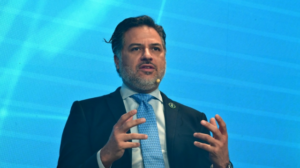





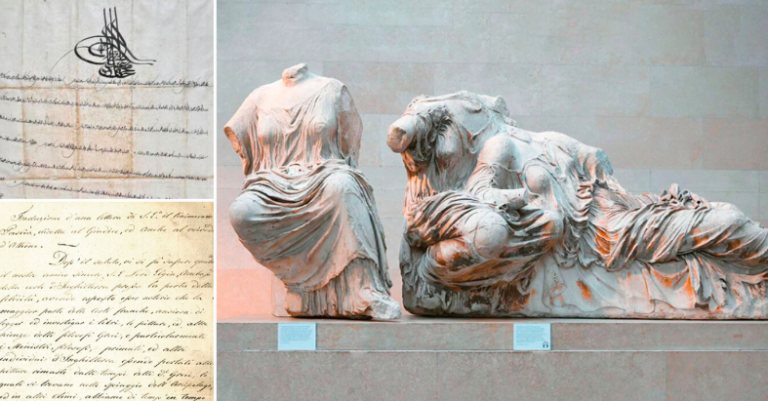
The surprising and significant gesture of support from Türkiye during the recent 25th Session of the UNESCO Intergovernmental Committee for the Return of Cultural Property to the Countries of Origin, endorsing the return of the Parthenon Sculptures to Greece, exemplifies the power of cultural diplomacy. The Director of Turkey’s anti-trafficking department, Zeynep Boz, unequivocally stated that the firman cited by the British in justifying the removal of the sculptures by Lord Elgin from Greece was not authentic.
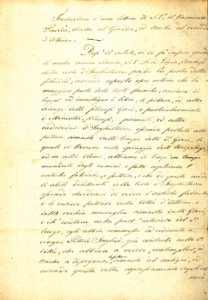
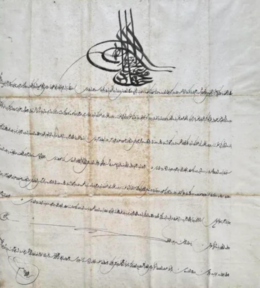
This revelation not only discredited a fundamental British claim but also affirmed the longstanding Greek position on the issue. While Türkiye’s public expression of impatience to celebrate the return of the sculptures together with Greece may seem sudden to some, it is a culmination of a positive shift that has been developing over the years, facilitated by diligent preparatory efforts of the Greek delegation. The Director of the Acropolis Museum, Nikolaos Stampolidis, highlighted to protothema.gr constructive role played by Turkey in recent times, noting a significant progression in their stance on the Parthenon Sculptures issue. The Greek delegation, armed with compelling evidence and a thorough understanding of the issue, dismantled the British narrative by highlighting the authentic nature of historical firmans. By presenting original firmans issued to Elgin in 1802 and to Lord Byron in 1810, the Greek side illustrated the stark disparity between these legitimate documents and the purported Elgin firman. This pointed out that the supposed firman was an Italian translation of a letter from a lesser Turkish official, casting doubt on its validity.
Furthermore, the fact that the Elgin firman was presented to the British Parliament 14 years after the removal of the Sculptures further undermined its credibility, suggesting it may have been a later fabrication to legitimize the acquisition. Despite the steadfast stance of the British Museum at the conference, the overwhelming support from 18 out of 20 participating countries for Greece indicates a shifting tide in favor of the return of the Parthenon Sculptures to their rightful home.
Parthenon sculptures: The Turkish archaeologist who supports their return to Greece
The influence of the conference on the British Museum’s stance While the British side maintained a firm position during the UNESCO conference, they lacked a compelling argument to uphold their claims. According to Mr. Stampolidis, their stance reflected a sense of unwavering ownership over the Parthenon Sculptures, insisting on recognition before considering any form of collaboration.
The overwhelming support for Greece from 18 out of 20 participating countries at the conference, with only Canada and Australia opting to remain neutral, was a decisive indication that the British claim on the Sculptures was being challenged. Coincidentally, following the conference revelations, a representative from the British Museum expressed willingness to engage in dialogue with Greece regarding the return of the Parthenon Sculptures and explore new avenues of cooperation. This shift in tone signifies a potential shift towards mutual understanding and collaboration between the two parties.
Contrasting attitudes on cultural heritage preservation Turkey’s recent support for the return of the Parthenon Sculptures serves as a stark contrast to their approach towards preserving Greek heritage within their borders. This contradiction is evident in their controversial decisions to convert historic Greek sites like Hagia Sophia and the Chora Monastery into mosques, despite objections from Greece and UNESCO. Mr. Stampolidis highlighted the absence of discussion regarding the Chora Monastery’s conversion during the UNESCO meeting, shedding light on the divisive nature of using antiquity as a political tool. The juxtaposition of Türkiye’s stance on the Parthenon Sculptures and their actions towards Greek monuments underscores the complexities of cultural diplomacy and the delicate balance required in navigating such issues.
Ask me anything
Explore related questions