
×
GreekEnglish

×
  • Politics
  • Diaspora
  • World
  • Lifestyle
  • Travel
  • Culture
  • Sports
  • Cooking
Saturday
17
Jan 2026
weather symbol
Athens 9°C
  • Home
  • Politics
  • Economy
  • World
  • Diaspora
  • Lifestyle
  • Travel
  • Culture
  • Sports
  • Mediterranean Cooking
  • Weather
Contact follow Protothema:
Powered by Cloudevo
> Culture

The man behind the puzzle that 99% can’t solve

First of all you must be patient, then you need spatial memory

Newsroom February 3 06:54

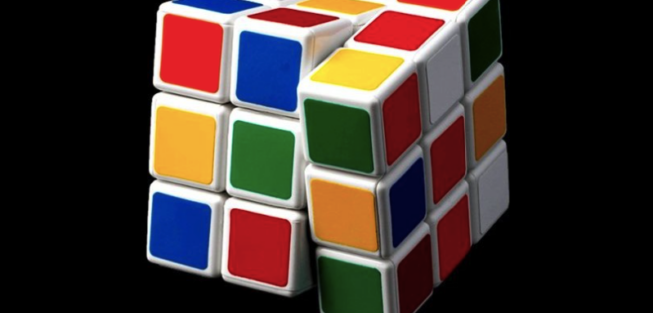
In 1975, the Hungarian academic Ernő Rubik applied for a patent on his invention.

Little did he know that his ingenious teaching tool, created behind the Iron Curtain, would become an iconic global phenomenon.

With its bright iconic design, plus the fact that it transcends languages, ages and backgrounds, and doesn’t even require instructions, it is perhaps not surprising the Rubik’s Cube became a best-selling global phenomenon.

Not to mention that it is portable, and can be solved in countless ways.

But initially, Ernő Rubik did not realise quite what he had on his hands when he invented his ingenious, confounding colour-matching puzzle.

He did not even think about whether the cube – that would ultimately make his name famous the world over – would be successful, he told the BBC’s Terry Wogan in 1986.

I was not worried because I never decided to do that, that was nothing that I was running for,” he said. He had originally not devised his cube as a toy, but as a teaching tool for his students.

In 1974, he was working as a professor of architecture at the Budapest College of Applied Arts.

Believing that the best way to teach his students was to show them, he wanted to create something they could play with to get them thinking creatively about geometric forms and spatial relationships.

See Also:

World’s Largest Jeweler Shifts Exclusively to Recycled Metals Sourcing

His aim was to make something tactile and mobile, that was simple enough for his students to understand but contained some kind of problem to be solved.

And also, importantly, it would challenge them to persevere when faced with a complex, frustrating puzzle.

>Related articles

Research: The BBC’s “first Black Briton” from the Roman era was ultimately…white and originated from southern England

Voyager 1 ready to make history again: in 2026 it will reach a distance of “one light-day” from Earth

The WHO presented for the first time guidelines on infertility

“First of all you must be patient, it’s very useful to solve a problem, then you need some spatial memory, three-dimensional memory,” he said on the talk show, Wogan.

“To memorise which congregation you are and where the pieces are and so on… If we close our eyes, we know, we remember, and not for a picture only but the meaning of the picture.”

Continue here: BBC

Ask me anything

Explore related questions

#Rubik's cube#science
> More Culture

Follow en.protothema.gr on Google News and be the first to know all the news

See all the latest News from Greece and the World, the moment they happen, at en.protothema.gr

> Latest Stories

Weather: A return to winter in the coming days – Cold and strong northerly winds – Kolydas’ post

January 17, 2026

A view of Nikolaos Stasinopoulos of Viohalco – The “enduring imprint” of Greece’s greatest industrialist

January 17, 2026

The horror of the “Tariff of the Dead”: how the Iranian regime prices the bodies of protesters

January 17, 2026

Mitsotakis on the Karystianou party: “There is a long distance between being the parent of a tragedy victim and being the leader of a political party”

January 17, 2026

Patras in carnival mode – This evening, the city’s official opening ceremony

January 17, 2026

Greenland as the first line ofdefense for the U.S. and NATO:

January 17, 2026

Changes at top universities: Oxford abolishes the term ‘doctores’ for inclusion reasons

January 17, 2026

Where affordable housing falls short in Greece: IOBE proposes a cap on rent increases

January 17, 2026
All News

> World

The horror of the “Tariff of the Dead”: how the Iranian regime prices the bodies of protesters

An Iranian businessman living in Greece explains to protothema.gr how the world's harshest dictatorship works - "They say that the money they are asking for is the money they spent on bullets to kill protesters. Unbelievable and yet true"

January 17, 2026

Greenland as the first line ofdefense for the U.S. and NATO:

January 17, 2026

Changes at top universities: Oxford abolishes the term ‘doctores’ for inclusion reasons

January 17, 2026

One dead after train–bus collision at the Port of Hamburg – see photos

January 16, 2026

Trump threatens tariffs against those who oppose U.S. plans for Greenland

January 16, 2026
Homepage
PERSONAL DATA PROTECTION POLICY COOKIES POLICY TERM OF USE
Powered by Cloudevo
Copyright © 2026 Πρώτο Θέμα