

×
GreekEnglish

×
  • Politics
  • Diaspora
  • World
  • Lifestyle
  • Travel
  • Culture
  • Sports
  • Cooking
Monday
19
Jan 2026
weather symbol
Athens 5°C
  • Home
  • Politics
  • Economy
  • World
  • Diaspora
  • Lifestyle
  • Travel
  • Culture
  • Sports
  • Mediterranean Cooking
  • Weather
Contact follow Protothema:
Powered by Cloudevo
> World

New Thoughts on the Populating of Europe

There were three waves of modern humans who migrated from the Levant into Europe between 54,000 and 42,000 years ago

Newsroom May 10 12:32

Live Science reports that archaeologist Ludovic Slimak of the University of Toulouse and his colleagues suggest that three waves of modern humans migrated from the Levant into Europe between 54,000 and 42,000 years ago. It had been previously thought that modern humans first entered Europe 42,000 years ago, based upon the analysis of teeth unearthed in Italy and Bulgaria.

>Related articles

Erich von Däniken, Swiss bestselling author who linked ancient civilizations to extraterrestrials, dies at 90

Crete, Pompeii & Stonehenge: The most important archaeological discoveries of 2025 that overturn what we knew

7,000-year-old wall found at the bottom of Brittany may explain the myth of the lost city

These people are considered to be the ancestors of Europe’s hunter-gatherer Aurignacian culture. But another recent study has dated a modern human tooth and small flint tools recovered at the site of Grotte Mandrin in southern France to 54,000 years ago, pushing the arrival of modern humans in Europe back some 10,000 years. Slimak compared these tools discovered in Europe with tools of similar age unearthed in the Levant, and found them to be similar. “I buil[t] a bridge between Europe and the East Mediterranean populations during the early migrations of sapiens in the continent,” he explained.

He also compared 45,000-year-old artifacts long thought to have been made by Europe’s Neanderthals with Early Upper Paleolithic artifacts from the Levant. He concluded that these objects could also have been crafted by modern humans who migrated into Europe from the Levant. “We have here, and for the first time, a serious candidate for a non-Neanderthalian origin of these industries,” Slimak claimed.

source archaeology.org

Ask me anything

Explore related questions

#archaeology#Levant#migration#pre historic Europe
> More World

Follow en.protothema.gr on Google News and be the first to know all the news

See all the latest News from Greece and the World, the moment they happen, at en.protothema.gr

> Latest Stories

Erfan Soltani confirmed alive by Iranian Human Rights Group after days of uncertainty

January 18, 2026

Rescue operation underway for eight hikers on Mount Taygetus; four injured

January 18, 2026

Piers Morgan recovering in hospital after serious fall in London

January 18, 2026

Prime Minister Mitsotakis’ agenda: From talks with farmers’ representatives to Davos for investment outreach

January 18, 2026

Iraq veterans report long-term health concerns after a lack of medical screening for toxic exposure

January 18, 2026

Skirtsos: ‘After years of efforts, the first results on maritime safety are starting to become visible’

January 18, 2026

Politico: Europe for the first time considers tough response to Trump on Greenland tariffs, what is the Anti-Brexit Act

January 18, 2026

The backstory behind Trump’s decision not to attack Iran: The camps in the White House, the SMS from Tehran, and the calls from Arab allies

January 18, 2026
All News

> Culture

The historic cafes of Athens: 12 legendary hangouts lost to time

The café-patisseries that set the rhythm of cosmopolitan Athens – “Flokas,” “Papaspirou,” “Sonia,” “Alaska,” “Lentzos,” “Floral,” “Blue Bell,” “Prapas,” “Pachos,” “Galaxy,” “Caprice,” “Centaur” were the most popular meeting points where modern Greek history was written, became songs and books, and left their mark with their famous culinary creations

January 16, 2026

Actress Melpo Zarokosta dies at 93

January 16, 2026

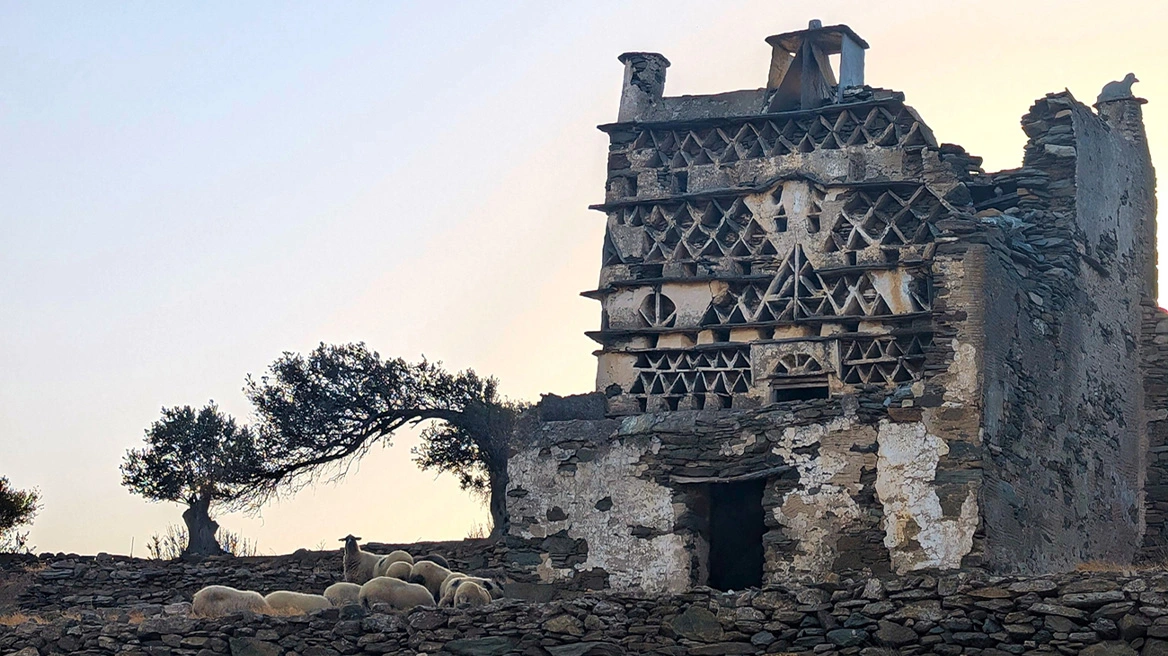
Cycladic Identity Initiative launches fourth funding phase to preserve the Cultural and Natural Heritage of the Cyclades

January 16, 2026

Grief in Crete for the loss of Yannis Xylouris

January 15, 2026

“A Picasso for 100 euros” — Christie’s for a million-euro painting

January 15, 2026
Homepage
PERSONAL DATA PROTECTION POLICY COOKIES POLICY TERM OF USE
Powered by Cloudevo
Copyright © 2026 Πρώτο Θέμα