

×
GreekEnglish

×
  • Politics
  • Diaspora
  • World
  • Lifestyle
  • Travel
  • Culture
  • Sports
  • Cooking
Saturday
17
Jan 2026
weather symbol
Athens 10°C
  • Home
  • Politics
  • Economy
  • World
  • Diaspora
  • Lifestyle
  • Travel
  • Culture
  • Sports
  • Mediterranean Cooking
  • Weather
Contact follow Protothema:
Powered by Cloudevo
> World

Embroidered patches allow existing fabrics to generate electricity

The phenomenon is known as the triboelectric effect, and it's what's responsible for the static charge that occurs when you're combing your hair

Newsroom November 27 09:01

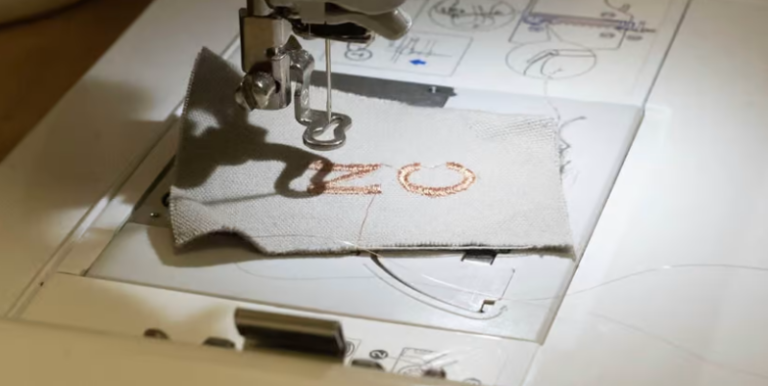
Although many groups are developing power-generating “smart fabrics,” the technology is often too complex to be scaled up to commercial use. Now, however, scientists have devised a simple method of embroidering electrical generators onto regular fabric.

The new technique is being developed at North Carolina State University, by a team led by Asst. Prof. Rong Yin.

It incorporates a special yarn, made of commercially available copper wires coated in polyurethane. That yarn gets embroidered onto a base of regular cotton fabric – or potentially any other material. In the area where the yarn is being added, though, the cotton is overlaid with a fabric made of a synthetic polymer called PTFE (polytetrafluoroethylene). There’s a tiny gap between the PTFE and the copper wires.

In a final step, a protective layer of regular cotton yarn is embroidered over top of the copper-wire yarn.

See Also:

>Related articles

Trump threatens tariffs against those who oppose U.S. plans for Greenland

CIA chief in Venezuela meets with Rodriguez

Industry: Energy deadlock after Commission’s “no” to Italian pricing model

Greece named “Favourite Cruise Destination” at the British Wave Awards

When the wearer of a garment incorporating the yarn subsequently moves around, the wires and the PTFE come in and out of contact with one another. When they touch, electrons are transferred between them, generating an electrical current. This phenomenon is known as the triboelectric effect, and it’s what’s responsible for the static charge that occurs when you’re combing your hair. Small devices that utilize the effect to generate usable electricity are called triboelectric nanogenerators (TENGs).

Read more: New Atlas

Ask me anything

Explore related questions

#cloths#electricity#energy#fabric#science#technology#world
> More World

Follow en.protothema.gr on Google News and be the first to know all the news

See all the latest News from Greece and the World, the moment they happen, at en.protothema.gr

> Latest Stories

Changes at top universities: Oxford abolishes the term ‘doctores’ for inclusion reasons

January 17, 2026

Where affordable housing falls short in Greece: IOBE proposes a cap on rent increases

January 17, 2026

Weather: Noticeable drop in temperature from today – Where it will snow and at which altitudes

January 17, 2026

One dead after train–bus collision at the Port of Hamburg – see photos

January 16, 2026

President of Air Traffic Controllers: Another communications blackout possible in the near future

January 16, 2026

Trump threatens tariffs against those who oppose U.S. plans for Greenland

January 16, 2026

X is down, thousands report problems

January 16, 2026

“Her father cut her hair because she asked to go to a hair salon, they never gave her money”: New testimonies about Laura

January 16, 2026
All News

> World

Changes at top universities: Oxford abolishes the term ‘doctores’ for inclusion reasons

Latin terms such as magistri (the masters) and doctorates, which have been in use since the Middle Ages, are replaced with the prefix vos ("you") to include non-binary students - Cambridge abolishes beef and lamb and Yale replaces "freshman" with neutral wording

January 17, 2026

One dead after train–bus collision at the Port of Hamburg – see photos

January 16, 2026

Trump threatens tariffs against those who oppose U.S. plans for Greenland

January 16, 2026

X is down, thousands report problems

January 16, 2026

Rama persists after rant at Greek journalist and questions the link between “Greek speakers” and Plato and Aristotle

January 16, 2026
Homepage
PERSONAL DATA PROTECTION POLICY COOKIES POLICY TERM OF USE
Powered by Cloudevo
Copyright © 2026 Πρώτο Θέμα