
×
GreekEnglish

×
  • Politics
  • Diaspora
  • World
  • Lifestyle
  • Travel
  • Culture
  • Sports
  • Cooking
Sunday
18
Jan 2026
weather symbol
Athens 6°C
  • Home
  • Politics
  • Economy
  • World
  • Diaspora
  • Lifestyle
  • Travel
  • Culture
  • Sports
  • Mediterranean Cooking
  • Weather
Contact follow Protothema:
Powered by Cloudevo
> Culture

8 billion people: How different the world would look if Neanderthals had prevailed

For 99% of the last million years of our existence, people rarely came across other humans

Newsroom November 17 10:16

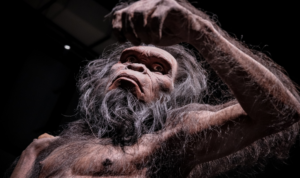
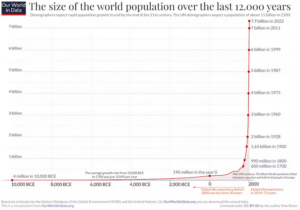
In evolutionary terms, the human population has rocketed in seconds. The news that it has now reached 8 billion seems inexplicable when you think about our history.

For 99% of the last million years of our existence, people rarely came across other humans. There were only around 10,000 Neanderthals living at any one time. Today, there are around 800,000 people in the same space that was occupied by one Neanderthal. What’s more, since humans live in social groups, the next nearest Neanderthal group was probably well over 100km away. Finding a mate outside your own family was a challenge.

Neanderthals were more inclined to stay in their family groups and were warier of new people. If they had outcompeted our own species (Homo sapiens), the density of population would likely be far lower. It’s hard to imagine them building cities, for example, given that they were genetically disposed to being less friendly to those beyond their immediate family.
See Also:

>Related articles

Trump threatens tariffs against those who oppose U.S. plans for Greenland

CIA chief in Venezuela meets with Rodriguez

Ballistic missile strike hits pier in Ukraine

A journey to the centre of the earth – Anemotrypa cave in Tzoumerka

The reasons for our dramatic population growth may lie in the early days of Homo sapiens more than 100,000 years ago. Genetic and anatomical differences between us and extinct species such as Neanderthals made us more similar to domesticated animal species. Large herds of cows, for example, can better tolerate the stress of living in a small space together than their wild ancestors who lived in small groups, spaced apart. These genetic differences changed our attitudes to people outside our own group. We became more tolerant.

Read more: The Conversation

Ask me anything

Explore related questions
#anthropology#demographics#Neanderthal#population#science#world
> More Culture

Follow en.protothema.gr on Google News and be the first to know all the news

See all the latest News from Greece and the World, the moment they happen, at en.protothema.gr

> Latest Stories

Erfan Soltani confirmed alive by Iranian Human Rights Group after days of uncertainty

January 18, 2026

Rescue operation underway for eight hikers on Mount Taygetus; four injured

January 18, 2026

Piers Morgan recovering in hospital after serious fall in London

January 18, 2026

Prime Minister Mitsotakis’ agenda: From talks with farmers’ representatives to Davos for investment outreach

January 18, 2026

Iraq veterans report long-term health concerns after a lack of medical screening for toxic exposure

January 18, 2026

Skirtsos: ‘After years of efforts, the first results on maritime safety are starting to become visible’

January 18, 2026

Politico: Europe for the first time considers tough response to Trump on Greenland tariffs, what is the Anti-Brexit Act

January 18, 2026

The backstory behind Trump’s decision not to attack Iran: The camps in the White House, the SMS from Tehran, and the calls from Arab allies

January 18, 2026
All News

> World

Erfan Soltani confirmed alive by Iranian Human Rights Group after days of uncertainty

The statement follows days of uncertainty and conflicting reports about the fate of the detained protester

January 18, 2026

Piers Morgan recovering in hospital after serious fall in London

January 18, 2026

Iraq veterans report long-term health concerns after a lack of medical screening for toxic exposure

January 18, 2026

Politico: Europe for the first time considers tough response to Trump on Greenland tariffs, what is the Anti-Brexit Act

January 18, 2026

The backstory behind Trump’s decision not to attack Iran: The camps in the White House, the SMS from Tehran, and the calls from Arab allies

January 18, 2026
Homepage
PERSONAL DATA PROTECTION POLICY COOKIES POLICY TERM OF USE
Powered by Cloudevo
Copyright © 2026 Πρώτο Θέμα