

×
GreekEnglish

×
  • Politics
  • Diaspora
  • World
  • Lifestyle
  • Travel
  • Culture
  • Sports
  • Cooking
Saturday
17
Jan 2026
weather symbol
Athens 12°C
  • Home
  • Politics
  • Economy
  • World
  • Diaspora
  • Lifestyle
  • Travel
  • Culture
  • Sports
  • Mediterranean Cooking
  • Weather
Contact follow Protothema:
Powered by Cloudevo
> technology

Certain cities could become “uninhabitable” due to the heat, say scientists

As temperatures begin to rise across Australia

Newsroom November 23 07:21

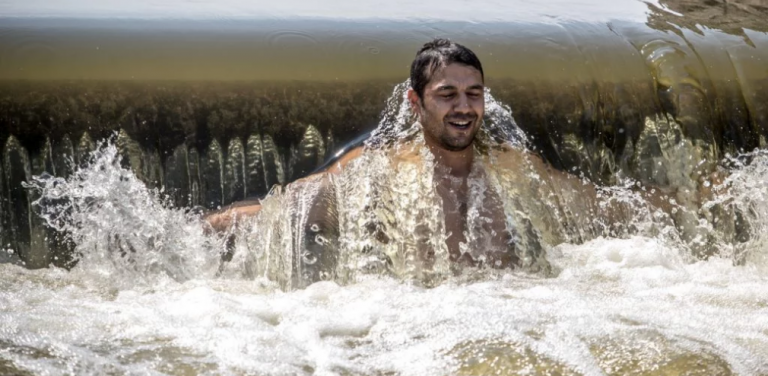
As the summer season starts to make its appearance, temperatures around Australia are already breaking dangerous records, with scientists warning that if things don’t change and climate doesn’t cool down, certain cities are at risk of becoming unviable in the next few decades.

A good example of this is the city of Hobart, that recorded six consecutive days with temperatures rising over 26C, something that hadn’t occurred for the past 130 years.

And things are even worse in Darwin, with some surfaces already being as hot as 70C.

The humidity only serves to make matters worse as the so-called ‘build-up’ season nears its close.

Greek Australian professor of high performance architecture at the University of NSW Mattheos Santamouris is looking into ways to lower the temperatures, especially in the CBD, as the atmosphere becomes “oppressive” as he describes it.

“The focus is often on the global impact of climate change, but we also need to understand what is happening at a local level, in our own cities,” Prof Santamouris told news.com. “If we can’t find a way to make our cities cooler, they will eventually become uninhabitable.”

Last August, a research was conducted with the initiative of the local government in order to find which parts of the city were the hottest, with the help of a dedicated ‘energy bus’ and drones.

The results of this investigation showed that mainly streets, roofs and parking lots give off the greatest amount of heat, raising the temperature of the surrounding areas as a result.

“Black surfaces like bitumen absorb high amounts of solar radiation leading to high surface temperatures,” explained Prof Santamouris. “A material of around 70C may heat the air by 3C.”

In researching ways to bring down the temperature, Prof Santamouris recommends the use of asphalt that doesn’t absorb heat.

>Related articles

The ordeal of a 28-year-old Greek man in Australia: He went on holiday to visit relatives, was injured at a beach, and is at risk of quadriplegia

Meteo: Forecasts point to a warm February in Greece, with temperatures up to +1.2°C above average

Winter chill recedes – Warmer weather approaching

“In Darwin, you have overheating because there’s too much bitumen and not enough greenery,” he added.

However, even the use of wildlife can only do so much once temperatures start entering the ‘red’ zone and the dampness starts kicking in.

Source: neoskosmos

Ask me anything

Explore related questions

#australia#cities#earth#heat#science#technology#temperatures
> More technology

Follow en.protothema.gr on Google News and be the first to know all the news

See all the latest News from Greece and the World, the moment they happen, at en.protothema.gr

> Latest Stories

One dead after train–bus collision at the Port of Hamburg – see photos

January 16, 2026

President of Air Traffic Controllers: Another communications blackout possible in the near future

January 16, 2026

Trump threatens tariffs against those who oppose U.S. plans for Greenland

January 16, 2026

X is down, thousands report problems

January 16, 2026

“Her father cut her hair because she asked to go to a hair salon, they never gave her money”: New testimonies about Laura

January 16, 2026

Rama persists after rant at Greek journalist and questions the link between “Greek speakers” and Plato and Aristotle

January 16, 2026

CIA chief in Venezuela meets with Rodriguez

January 16, 2026

Less alcohol and lower speeds with the new Highway Code and strict fines

January 16, 2026
All News

> Politics

Mitsotakis attends the inauguration of the renovated Emergency Department at Red Cross Hospital

The Prime Minister, accompanied by Adonis Georgiadis and Marios Themistokleous, was given a tour of the new Emergency Department facilities by the hospital’s governor – the second phase of the project is expected to be completed in spring 2026

January 16, 2026

Marinakis: Anestidis has no place in a meeting with Mitsotakis; The video with insults crosses the line of decency

January 16, 2026

Gerapetritis: ‘Extension of territorial waters will come, as marine parks and spatial planning’

January 16, 2026

Hydrocarbon contracts in Parliament, Greece as an energy hub with Saudi Arabia and investments in the background

January 15, 2026

Pavlos Marinakis: In principle, agreement for Mitsotakis–Farmers meeting on Monday at noon

January 15, 2026
Homepage
PERSONAL DATA PROTECTION POLICY COOKIES POLICY TERM OF USE
Powered by Cloudevo
Copyright © 2026 Πρώτο Θέμα