




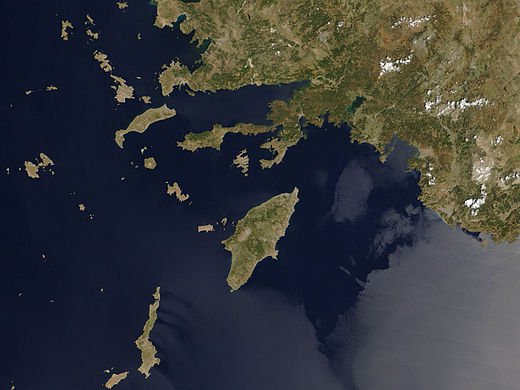
The Dodecanese — the island chain furthest from the Greek mainland which includes Rhodes, Kos as well as other touristic gems — attracts thousands of visitors every year.
However, many sipping their ouzo or Greek coffee would not be aware that their sunny island paradise did not actually become part of the Greek state until halfway through the 20th century.
It was only in 1947, after having endured centuries of occupation by different powers and a campaign to strip them of their Greek identity, that the islanders joined their fellow Greeks.
The 15 main islands and 93 islets of the modern Dodecanese have always been something of a crossroads. Ever since antiquity, the islands had different forms of government or autonomy.
Even after the Ottoman conquest in 1522, the largest islands — Rhodes and Kos — came under direct Turkish rule while the rest had different relations with the new empire.
Using this self-government to flourish economically, Ottoman attempts to rescind these privileges in the 19th century pushed most of the islanders to favour union with an emerging, independent Greek state.
However, the London Protocol of 1830 which recognized Greek independence left out the islands, most of which — apart from Kastellorizo near Turkey — later came under Italian occupation during Italy’s war with the Ottomans.
In 1923 Italy annexed the islands under the Treaty of Lausanne and later began a policy of Italianization, trying to strip the influence of Greek culture, language and traditions.
Fascist Italy also tried to implement a settlement policy and by 1936 16,700 Italians were living on the islands, mostly on Rhodes and Leros.
Worse was to come as fascist racial laws were enforced, and totalitarian architecture projects — sometimes using forced Greek labor — were undertaken as part of Mussolini’s efforts to Italianize the islands.
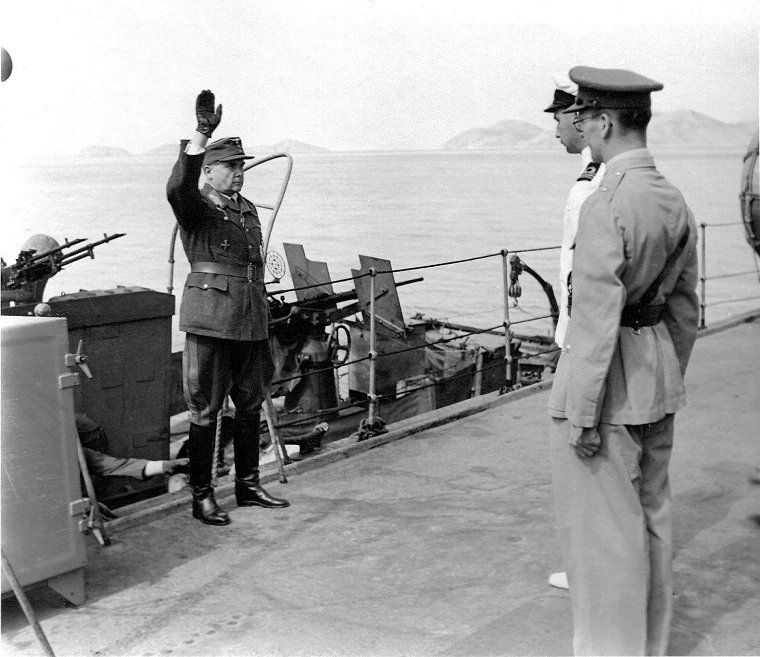
(Maj. Gen. Otto Wagener surrenders the Dodecanese to British forces, May 1945)
With a second European war looming, the Greek population narrowly avoided conscription as they were not full citizens of the Italian state. However, the Allied attempt to take the Dodecanese without air cover was a disaster and Nazi Germany maintained a military grip on the islands until the end of the Second World War.
This occupation led to the deaths of most of the islands’ Jewish community, with 1,200 out of the pre-occupation population of 6,000 escaping to Turkey.
After Germany’s defeat, the islands passed into British hands and in 1947 a Treaty of Peace between Italy and the victorious powers transferred them to Greece, along with $105 million in reparations.
Since then the Dodecanese have been part of Greece, though with the occasional historical hangover showing their once-independent status — for example, amateur radio still treats the islands as another jurisdiction, giving them a different call sign to mainland Greece.
Last year the Greek parliament held a special session to mark seven decades of the Dodecanese islands’ reunification with the rest of the country.
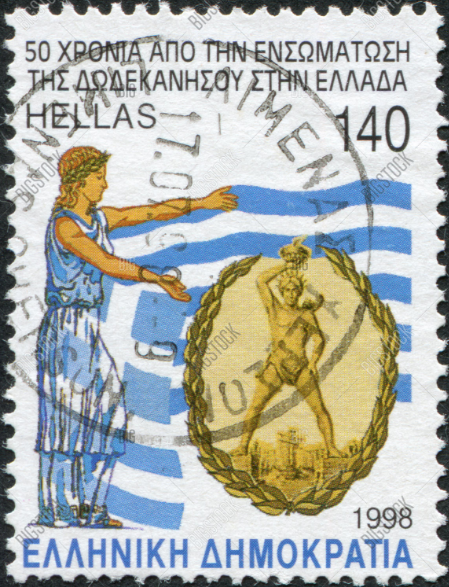
(Special stamp marking the Dodecanese islands’ incorporation inside Greece)
Source: greekreporter
Ask me anything
Explore related questions