

×
GreekEnglish

×
  • Politics
  • Diaspora
  • World
  • Lifestyle
  • Travel
  • Culture
  • Sports
  • Cooking
Saturday
31
Jan 2026
weather symbol
Athens 14°C
  • Home
  • Politics
  • Economy
  • World
  • Diaspora
  • Lifestyle
  • Travel
  • Culture
  • Sports
  • Mediterranean Cooking
  • Weather
Contact follow Protothema:
Powered by Cloudevo
> Culture

Ancient mummy DNA reveals surprises about genetic origins of Egyptians

They found that ancient Egyptians were closely related to Anatolian & Neolithic European populations as well as the Levant areas in the near east

Newsroom November 9 09:46

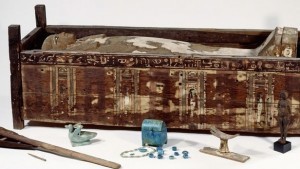
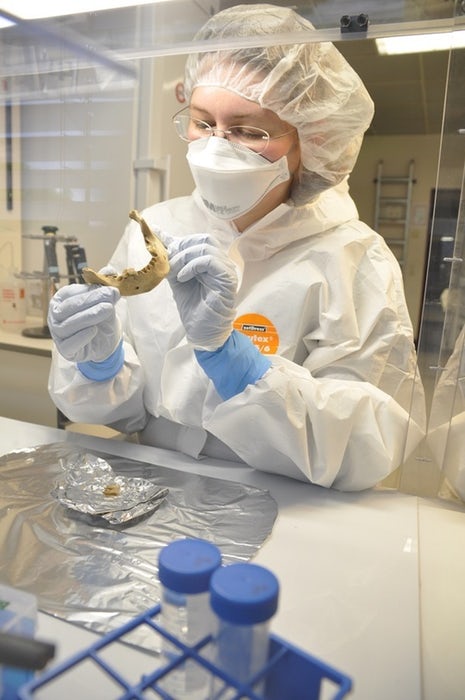
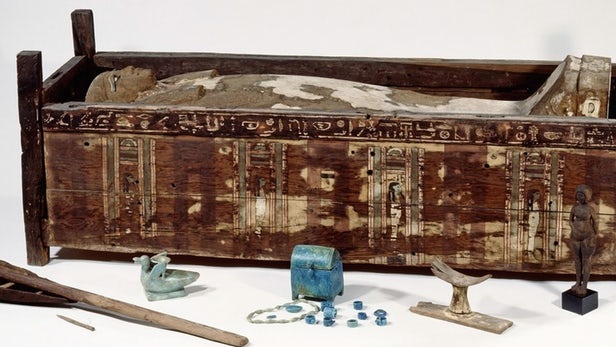
For the first time, scientists have extracted full nuclear genome data from ancient Egyptian mummies. The results offer exciting insights into how different ancient civilizations intermingled and also establishes a breakthrough precedent in our ability to study ancient DNA.

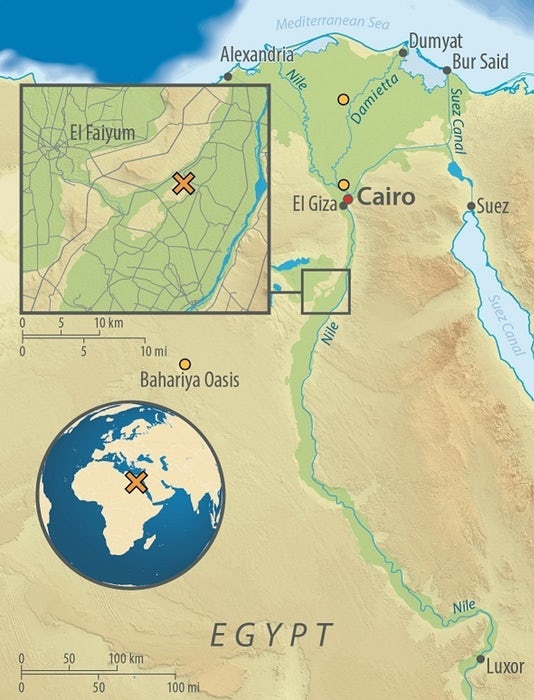
The international team of scientists, led by researchers from the University of Tuebingen and the Max Planck Institute for the Science of Human History in Jena, sampled 151 mummified remains from a site called Abusir el-Meleq in Middle Egypt along the Nile River. The samples dated from 1400 BCE to 400 CE and were subjected to a new high-throughput DNA sequencing technique that allowed the team to successfully recover full genome-wide datasets from three individuals and mitochondria genomes from 90 individuals.

“We wanted to test if the conquest of Alexander the Great and other foreign powers has left a genetic imprint on the ancient Egyptian population,” explains one of the lead authors of the study, Verena Schuenemann.
ancient-egyptian-mummy-dna-3

In 332 BCE, for example, Alexander the Great and his army tore through Egypt. Interestingly the team found no genetic trace of not only Alexander the Great’s heritage, but of any foreign power that came through Egypt in the 1,300-year timespan studied.

“The genetics of the Abusir el-Meleq community did not undergo any major shifts during the 1,300 year timespan we studied,” says Wolfgang Haak, group leader at the Max Planck Institute, “suggesting that the population remained genetically relatively unaffected by foreign conquest and rule.”

They found that ancient Egyptians were closely related to Anatolian and Neolithic European populations, as well showing strong genetic traces from the Levant areas in the near east (Turkey, Lebanon).
ancient-egyptian-mummy-dna-1

This genetic ancestry stands apart from more modern Egyptians who share around 8 percent of their DNA with Sub-Saharan African populations. The data offers a fascinating insight into a prolonged period where ancient Egyptian ancestry did not mix with its southern African counterparts. It also suggests that this gene flow into modern Egyptian populations occurred relatively recently, within the past 1,500 years.

The study points out that the Trans-Saharan slave trade, which moved an estimated 7 million sub-Saharan slaves up to Northern Africa, over a thousand years up to the nineteenth century, most likely was how this genetic line influenced modern Egyptians.
>Related articles

Applications are open for the National Hellenic Society’s Heritage Greece 2026

European Parliament: “Yes” to AI protection for artists and media in the EU

A 48-year-old was arrested in Piraeus for possession of a 4th-century BC marble antiquity

ancient-egyptian-mummy-dna-2

Now that a robust and reliable way has been developed to study the DNA of ancient remains the researchers hope to broaden their analysis across a wider geographical variety of mummies. This will not only help paint a clearer portrait of Egypt’s population history but give us a greater understanding of the genetic movements of ancient civilizations in the region.

Source: newatlas.com

Ask me anything

Explore related questions

#Anatolia#ancient egypt#archaeology#civilazation#culture#dna#genetic#history#Levant#mummy#Neolithic European#origins
> More Culture

Follow en.protothema.gr on Google News and be the first to know all the news

See all the latest News from Greece and the World, the moment they happen, at en.protothema.gr

> Latest Stories

Greece: Flyover on Kifisos under consideration and relocation of businesses outside Athens

January 31, 2026

Emergency Weather Bulletin: Prolonged heavy rainfall, thunderstorms & hail from tomorrow, Sunday

January 31, 2026

Mitsotakis on the 30th anniversary of the Imia crisis: There are no “grey zones” in the Aegean; once again we bow to the fallen

January 31, 2026

Imia Crisis 30 Years On: What brought down the helicopter? What really happened after the “no ships – no troops – no flags” decision? (video)

January 31, 2026

Horror in a basement in Thessaloniki: He strangled 46-year-old Maria and threw her in the trash, hid the body of 43-year-old Vicky

January 31, 2026

New Epstein documents: Photos show Prince Andrew over a woman lying on the floor (photos)

January 31, 2026

Historic opportunity for Greek agri-food products from the EU–India agreement – Tariffs on olive oil reduced to zero

January 31, 2026

Hellenic Police on Laura’s disappearance: It appears she had already landed in Germany when her disappearance was reported

January 31, 2026
All News

> Politics

Mitsotakis on the 30th anniversary of the Imia crisis: There are no “grey zones” in the Aegean; once again we bow to the fallen

“The experience of Imia teaches that national vigilance must be a daily duty,” the prime minister stresses in his post

January 31, 2026

Imia Crisis 30 Years On: What brought down the helicopter? What really happened after the “no ships – no troops – no flags” decision? (video)

January 31, 2026

Mitsotakis: In order to be a prosperous and democratic country, we must be safe – Citizens accept that defense spending is necessary

January 30, 2026

Communication between Gerapetritis and Rubio: Focus on the 6th round of the Strategic Dialogue in Athens

January 30, 2026

Mitsotakis: Tax cuts mean wage increases – We said it, we did it!

January 30, 2026
Homepage
PERSONAL DATA PROTECTION POLICY COOKIES POLICY TERM OF USE
Powered by Cloudevo
Copyright © 2026 Πρώτο Θέμα