





US government scientists work hard to protect the public.
Some study infectious diseases and effective treatments. Others ensure that drugs, food, vehicles, or consumer products live up to their claims and don’t harm anyone.
But the concerns at NASA’s headquarters are, quite literally, extraterrestrial — which is why the space agency now has a job opening for “planetary protection officer.”
The gig? Help defend Earth from alien contamination, and help Earth avoid contaminating alien worlds it’s trying to explore.
The pay? A six-figure salary, from $124,406 to $187,000 a year, plus benefits.
A rare and cosmically important position
While many space agencies hire planetary protection officers, they’re often shared or part-time roles.
In fact, only two such full-time roles exist in the world: one at NASA and the other at the European Space Agency.
That’s according to Catharine Conley, NASA’s only planetary protection officer since 2014. Business Insider interviewed Conley most recently in March.
“This new job ad is a result of relocating the position I currently hold to the Office of Safety and Mission Assurance, which is an independent technical authority within NASA,” Conley told Business Insider in an email on Tuesday. (She did not say whether she planned to reapply for the position, which is held for at least three years but may be extended to five years.)
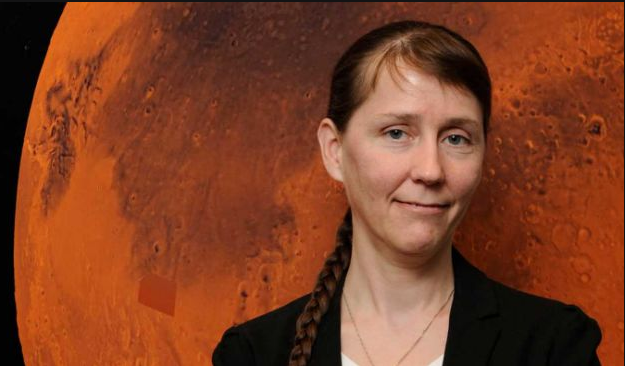
(Catharine Conley planetary protection officer Paul Alers NASA)
The position was created after the US ratified the Outer Space Treaty of 1967, specifically to support Article IX of the document:
“States Parties to the Treaty shall pursue studies of outer space, including the moon and other celestial bodies, and conduct exploration of them so as to avoid their harmful contamination and also adverse changes in the environment of the Earth resulting from the introduction of extraterrestrial matter and, where necessary, shall adopt appropriate measures for this purpose.”
Part of the international agreement is that any space mission must have a less than 1-in-10,000 chance of contaminating an alien world.
“It’s a moderate level,” Conley previously told Business Insider. “It’s not extremely careful, but it’s not extremely lax.”
This is why NASA’s planetary protection officer occasionally gets to travel to space centers around the world and analyze planet-bound robots. The officer helps ensure we don’t accidentally contaminate a pristine world that a probe is landing on — or, more often, is zooming by and photographing.
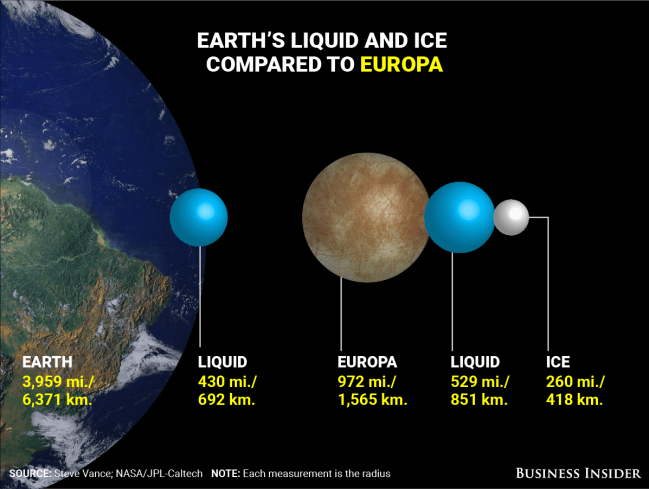
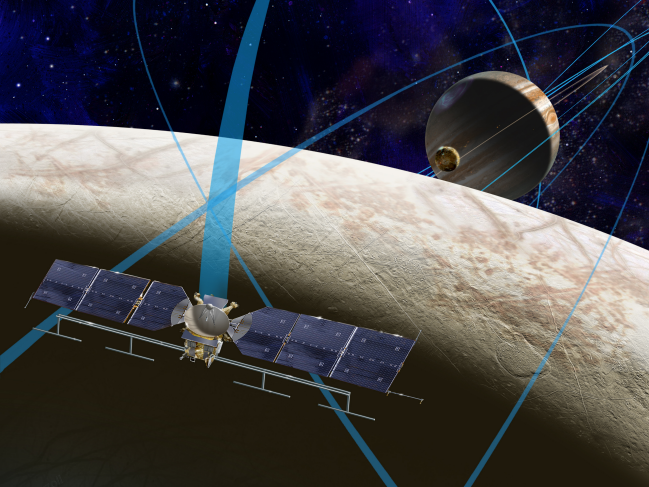
For example, Congress and the president have given NASA the green light to explore Europa, an icy, ocean-hiding, and potentially habitable moon of Jupiter. The goal of the initial $2.7 billion Europa Clipper mission is not to land on the moon, though, but to map its surface and look for clues about its hidden ocean and habitability.
Still, there’s a chance the robot could crash-land — so someone like Conley comes in to mitigate risk.
The concern also works the other way, most imminently for Mars.
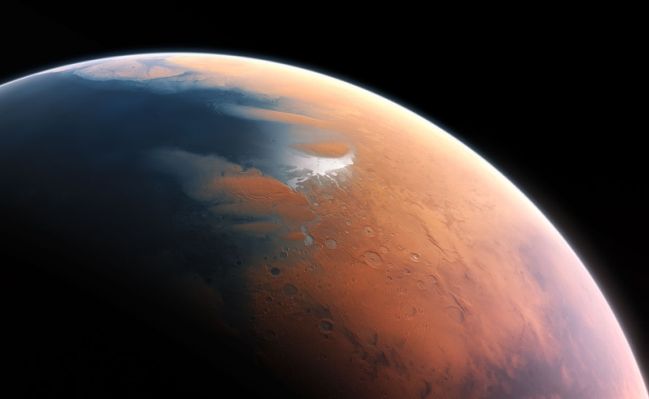
The red planet is a frequent target for NASA because it’s oddly similar to Earth. It may have once been covered in water and able to support life, which is why many scientists are pushing hard for a Mars sample return mission, ostensibly to seek out signs of aliens.
While the expectation is not to scoop up freeze-dried Martian microbes — only ancient, microscopic fossils — there’s always the chance of contamination once those samples are in earthbound labs.
Again, this is where the planetary protection officer and their team come in. They help establish the equipment, protocols, and procedures to reduce such risks.
“The phrase that we use is ‘Break the chain of contact with Mars,'” Conley previously said.
No one ever said defending Earth had to be glorious all the time, though — Conley said a typical week mostly involved a lot of emails and reading studies, proposals, and other materials.
Who qualifies as a candidate
An out-of-this-world job like Conley’s requires some equally extraordinary qualifications.
A candidate must have at least one year of experience as a top-level civilian government employee, plus have “advanced knowledge” of planetary protection and all it entails.
If you don’t have “demonstrated experience planning, executing, or overseeing elements of space programs of national significance,” you may be wasting your time by submitting an application.
The job involves a lot of international coordination — space exploration is expensive, and the costs are frequently shared by multiple nations — so NASA needs someone with “demonstrated skills in diplomacy that resulted in win-win solutions during extremely difficult and complex multilateral discussions.”
Did we mention the advanced degree in physical science, engineering, or mathematics? You should have that on your résumé, too.
The job comes with a “secret” security clearance, and noncitizens aren’t technically allowed to apply. (That rule is thanks to an executive order signed by President Gerald Ford in 1976.)
NASA is accepting applications at USAJobs.gov from July 13 through August 14.
Ask me anything
Explore related questions