





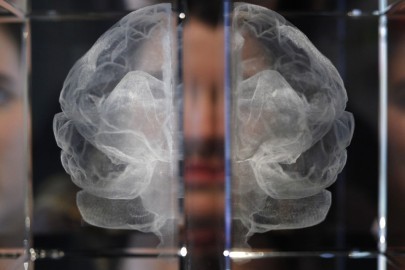
You saw the pictures in science class—a profile view of the human brain, sectioned by function. The piece at the very front, right behind where a forehead would be if the brain were actually in someone’s head, is the pre-frontal cortex. It handles problem-solving, goal-setting, and task execution. And it works with the limbic system, which is connected and sits closer to the center of the brain. The limbic system processes emotions and triggers emotional responses, in part because of its storage of long-term memory.
When a person lives in poverty, a growing body of research suggests the limbic system is constantly sending fear and stress messages to the prefrontal cortex, which overloads its ability to solve problems, set goals, and complete tasks in the most efficient ways.
This happens to everyone at some point, regardless of social class. The overload can be prompted by any number of things, including an overly stressful day at work or a family emergency. People in poverty, however, have the added burden of ever-present stress. They are constantly struggling to make ends meet and often bracing themselves against class bias that adds extra strain or even trauma to their daily lives.
And the science is clear—when brain capacity is used up on these worries and fears, there simply isn’t as much bandwidth for other things.
Economic Mobility Pathways, or EMPath, has built its whole service-delivery model around this science, which it described in its 2014 report, “Using Brain Science to Design New Pathways Out of Poverty.” The Boston nonprofit started out as Crittenton Women’s Union, a merger of two of the city’s oldest women-serving organizations, both of which focused on improving the economic self-sufficiency of families. It continues that work with a new name and a burgeoning focus on intergenerational mobility.
After years of coaching adults and watching those benefits trickle down to children, EMPath has brought children into the center of its model—offering a way out of intergenerational poverty with brain science.
Elisabeth Babcock, the president and CEO of EMPath, said people in poverty tend to get stuck in vicious cycles where stress leads to bad decision-making, compounding other problems and reinforcing the idea that they can’t improve their own lives.
“What we’re trying to do is create virtuous cycles where people take a step and they find out they can accomplish something that they might not have thought they could accomplish, and they feel better about themselves,” Babcock said. Maybe that step helps them earn more money, solves a child-care problem that leads to better child behavior, or simply establishes a sense of control over their own lives. All of these things reduce stress, freeing up more mental bandwidth for further positive steps.
It’s true that exposure to the constant stresses and dangers of poverty actually changes people’s brains. Al Race, the deputy co-director of the Center on the Developing Child at Harvard University, which has an enduring partnership with EMPath, says children who grow up in and remain in poverty are doubly affected. But the sections of the brain in question are also known to be particularly “plastic,” Race said, meaning they can be strengthened and improved well into adulthood.
EMPath’s Intergenerational Mobility Project, known as Intergen, uses three tools—one for adults, one for kids, and one for the family as a whole—to frame how they think about their individual and collective lives.
Read the rest of the article HERE
Ask me anything
Explore related questions


