

×
GreekEnglish

×
  • Politics
  • Diaspora
  • World
  • Lifestyle
  • Travel
  • Culture
  • Sports
  • Cooking
Sunday
25
Jan 2026
weather symbol
Athens 15°C
  • Home
  • Politics
  • Economy
  • World
  • Diaspora
  • Lifestyle
  • Travel
  • Culture
  • Sports
  • Mediterranean Cooking
  • Weather
Contact follow Protothema:
Powered by Cloudevo
> Health

New blood test could detect location of cancer in body!

Could be used as a screening test

Newsroom March 10 08:13

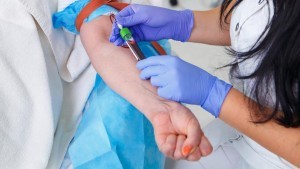
Researchers are developing a blood test that can tell not only whether someone has cancer, but in what organ the tumors are lurking. The test could mean more prompt, potentially life-saving treatment for patients.
Researchers describe their blood test as a kind of dual authentication process. It is able to detect the presence of dying tumor cells in blood as well as tissue signatures, to signal to clinicians which organ is affected by the cancer.
There already are tests that screen for traces of DNA released by dying cancer cells. Such blood tests show promise in the treatment of patients to see how well anti-cancer therapies are working.
But researchers at the University of California, San Diego discovered a new clue, using organ-specific DNA signatures, that leads them to the particular organ that is affected.
The finding makes the new blood test potentially useful as a screening tool in people suspected of having cancer.
UC-San Diego bioengineering professor Kun Zhang is senior author of a paper in Nature Genetics about the experimental test.
“So when you try to do these kinds of early screening or early detection [tests], these people are healthy. So if you take a blood draw and then you do a test, and you find some signature of cancer, that is not enough because you do not know what to do next,” Zhang said. “And so, in this case, we developed a method where we can say whether there is a cancer growing in the body and if the answer is ‘Yes,’ we can also say something about where does it grow.”
The test screens for a DNA signature called a CpG methylation haplotype, which is unique for each tissue in the body.
When a cancer grows in an organ, it competes with healthy tissue for nutrients and space, killing off healthy cells, which release their DNA into the bloodstream.

more at: voanews.com

Ask me anything

Explore related questions

#blood#cancer#test
> More Health

Follow en.protothema.gr on Google News and be the first to know all the news

See all the latest News from Greece and the World, the moment they happen, at en.protothema.gr

> Latest Stories

The path of the patricide—from prison for the murder of his mother to admission to Dromokaiteio and his discharge

January 25, 2026

“We have appealed to the Council of State, to ministries, we asked for the intervention of the Transparency Authority—no one is doing anything,” says the mayor of Milos about the new environmental crime

January 25, 2026

“My child, I’m dying now, don’t hurt me anymore”: the last words of the 80-year-old before being killed by his son

January 25, 2026

Smiling climber Alex Honnold waves to onlookers watching him from inside the skyscraper in Taiwan – watch the video

January 25, 2026

New “ecological crime” with a five-star hotel in Mytakas, Milos, next to Sarakiniko – watch the video

January 25, 2026

Mitsotakis: Europe must remain united and maintain channels of cooperation with the US, even in times of tension – We seek an active role in Gaza

January 25, 2026

Week of pay rises for about 1 million private-sector employees due to changes in direct taxation – See examples

January 25, 2026

A university in Texas banned a professor from teaching Plato

January 25, 2026
All News

> Lifestyle

Stefi: ‘The song I sent to Eurovision is about the unity of people across Europe

The singer will present her song in the first semi-final of Sing for Greece 2026 on February 11

January 24, 2026

A final farewell to fashion icon Valentino with white roses: Wintour, Versace, and Hathaway say goodbye

January 23, 2026

How old are your lungs? The simple at-home test that gives the answer

January 22, 2026

Farah Diba Pahlavi, the story of Iran’s first and last “empress”

January 22, 2026

Fotini Pelouso: Her roots in Thebes, the hardest Greek word, and her favorite scene in ‘The Great Chimera’

January 22, 2026
Homepage
PERSONAL DATA PROTECTION POLICY COOKIES POLICY TERM OF USE
Powered by Cloudevo
Copyright © 2026 Πρώτο Θέμα